
Kitchen Upgrading Tips Mintpalment: Easy Ways to Improve Your Kitchen
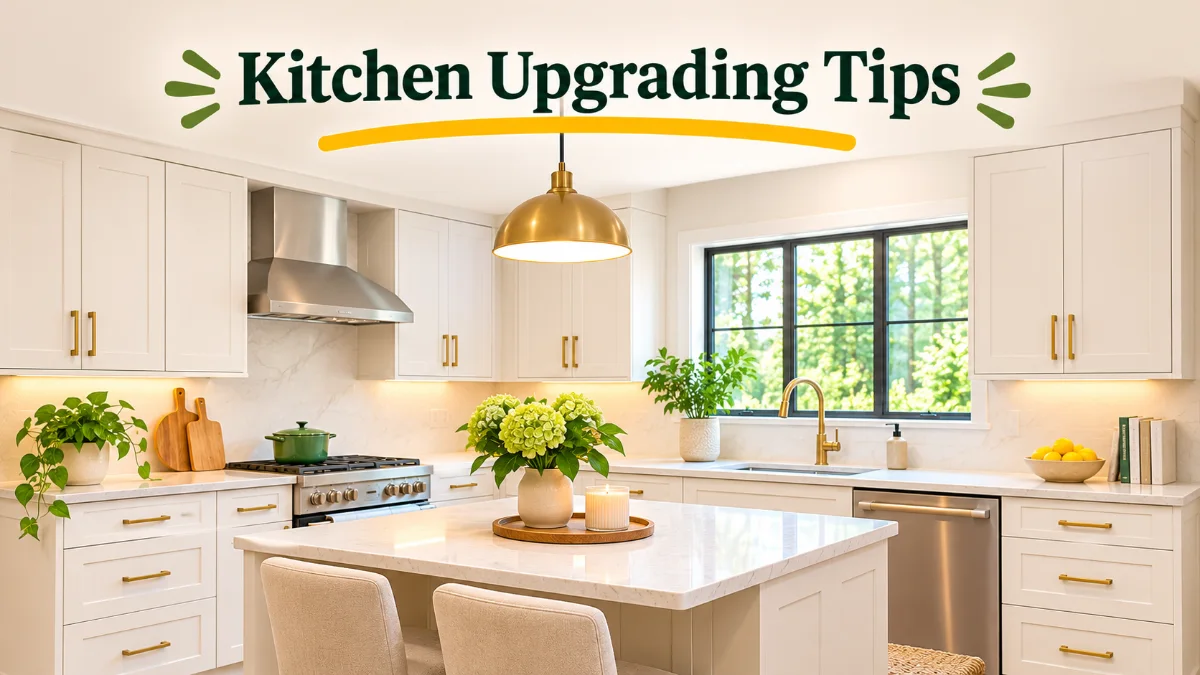
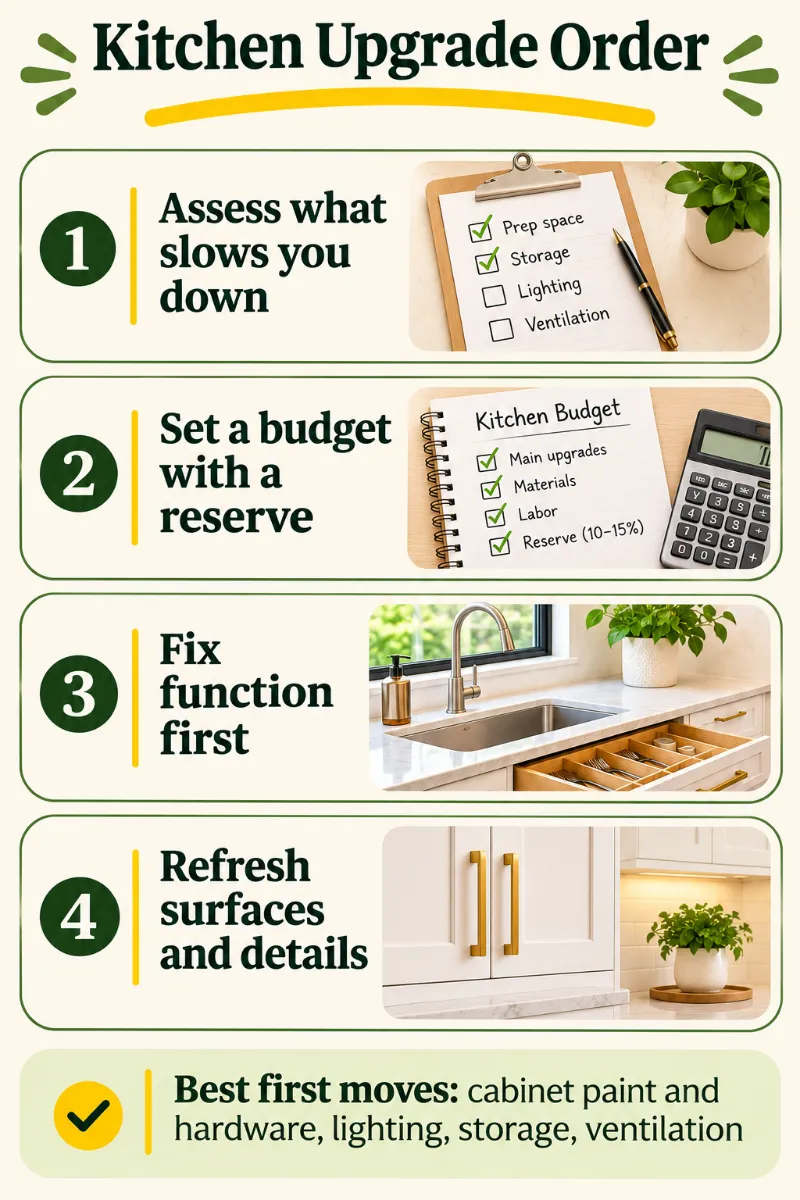
Kitchen upgrading tips mintpalment boil down to one sequence: assess what slows you down, set a budget with a reserve, fix function first, then refresh surfaces and details. In most kitchens the best first moves are cabinet paint and hardware, better lighting, smarter storage and working ventilation. Save countertops, appliances and layout changes for later, once the cheaper steps have proven their value.
What Do Kitchen Upgrading Tips Mintpalment Mean?
Kitchen upgrading tips mintpalment is a search phrase that blogs use for practical, low-cost kitchen improvement advice. A related phrase, kitchen upgrading advice mintpalment, appears on similar pages. None of the government and manufacturer sources checked for this guide uses either term, so treat them as labels for sensible kitchen upgrading, not a program, standard or product line.
Kitchen upgrading sits between a cosmetic refresh and a full kitchen renovation or kitchen remodeling project. Guides commonly describe three scopes:
- Refresh: change surfaces, hardware and lighting while keeping the layout.
- Pull-and-replace: keep the footprint but swap cabinets, counters and appliances.
- Full remodel: change the layout, which often means moving plumbing, gas or electrical lines.
Why Upgrading Your Kitchen Is Important
The kitchen is where meals are prepared, dishes are cleaned and the household gathers. Outdated cabinets, poor lighting, limited storage and old fixtures make daily routines harder. Kitchen improvement also supports home value. Redfin’s guidance for buyers says kitchens, bathrooms, energy-efficient upgrades and curb appeal tend to offer the best returns, though personal comfort still matters.
Kitchen upgrading tips mintpalment are useful because they put problems in order. You fix what hurts daily use first, you spend where change is visible, and you avoid buying trendy items that do not suit your space.
Start With an Honest Assessment
Assess the current condition of the kitchen before you shop. Cook a full meal and write down what slows you down. Check cabinets, faucet, sink, lighting, wall paint, flooring, countertops and any appliance you rarely use.
Sort every problem into three groups:
- Things that make cooking harder.
- Things that make cleaning harder.
- Things that only bother you visually.
Fix the first two groups first. Then measure wall lengths, counter depth, aisle widths and ceiling height. Measuring before you buy prevents most returns and refits.
Plan Before You Buy Anything
Kitchen renovation planning means choosing the scope, the order and the money before you choose a color. Redfin’s article suggests sorting projects into urgent (safety or damage), necessary (daily function) and optional (cosmetic), and reserving an extra 1% to 4% of the budget for surprises, especially in older homes.
Set a Realistic Kitchen Upgrade Budget
Sound kitchen upgrading tips mintpalment always start with the budget. A budget kitchen renovation works when you list high-impact projects and separate essential repairs from cosmetic upgrades. Essential repairs include plumbing, electrical work and unsafe surfaces. For a simple refresh, prioritize hardware, lighting, organization and paint. Kitchen improvement costs also include installation, delivery and a contingency allowance, so ask for written quotes that spell out what each covers. Compare suppliers before you commit.
Kitchen Upgrades at a Glance
This table is a general guide to cost, effort and impact, not a price list. Local prices vary.
| Upgrade | Typical cost | Difficulty | Impact |
|---|---|---|---|
| Cabinet paint | Low | Easy to medium | High |
| Cabinet hardware | Low | Easy | Medium |
| Under-cabinet lighting | Low | Easy to medium | High |
| Drawer dividers and pull-outs | Low to medium | Easy | High |
| Wall paint | Low | Easy | Medium to high |
| Faucet or sink swap | Medium | Medium | Medium |
| Backsplash | Low to medium | Medium | Medium to high |
| Flooring | Medium to high | Medium to hard | High |
| Countertops | High | Professional | High |
| Appliances | High | Professional | Medium |
| Layout change | Highest | Professional | High |
Easy Kitchen Upgrading Tips Mintpalment
Easy kitchen upgrading tips mintpalment start with ten smart ideas that competing guides repeat, in a sensible order:

- Refresh the cabinets.
- Upgrade the lighting.
- Improve storage.
- Update the backsplash.
- Replace or refresh the countertops.
- Choose energy-efficient appliances.
- Make a small kitchen feel bigger.
- Upgrade the faucet and fixtures.
- Add sustainable improvements.
- Set a realistic budget.
Each one is covered below, along with the topics other guides skip: ventilation, flooring, safety and care.
Cabinets: Refresh Before You Replace
Kitchen cabinets cover the largest visual area, so they carry the biggest effect. Kitchen upgrading tips mintpalment guides agree on one point: if the boxes are sound, cabinet refacing or repainting usually beats cabinet replacement. If you are repainting cabinets, our guides to Dover White and Pearly White show how each white looks in different light.
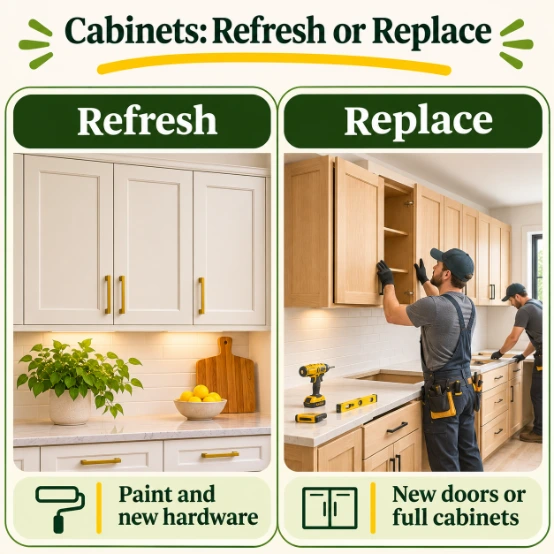
- Paint: clean, lightly sand, prime and use durable cabinet paint. Light neutrals such as white, cream, light gray or soft green are common choices.
- Two-tone look: light upper cabinets with darker lower ones give a contemporary balance.
- Kitchen hardware: new handles in black, brushed brass or stainless steel are an affordable update. Tighten or replace hinges, and consider soft-close hardware.
- Interior organizers: shelf organizers make old cabinets more useful.
- Open shelving: some guides suggest swapping a few upper doors for shelves, and Apartment Therapy’s DIY experts cite open shelving as a favorite.
Replace cabinets only when the boxes are damaged or the layout cannot be fixed. Manufacturers such as KraftMaid publish care pages on touching up dings and scratches and on keeping doors, hinges and drawers aligned, and they offer warranty terms, so check yours before you paint or reface.
Countertops: Choose for Daily Use
Kitchen countertops take heat, water and knife work, so choose for how you cook and clean.
- Quartz: consistent patterns and easy upkeep, but protect it from excessive heat.
- Granite: a natural stone look, though some finishes need sealing.
- Laminate: the budget option, but vulnerable to chips and hot pans.
- Solid surface: a seamless look that can scratch.
- Butcher block: warm, but needs regular oiling.
- Marble: beautiful, but it stains easily.
If replacement costs too much, repair damaged edges, renew sealants, or install a new surface sheet. One Apartment Therapy example: Diane Henkler painted Formica counters to resemble Carrara marble for about $100, and the finish lasted seven years. Measure carefully and check seams, sink cutouts and overhangs. Countertop installation is best left to professionals.
Update Your Kitchen Backsplash
Backsplash installation protects the wall behind the stove and sink and can become the room’s focal point. Ceramic tile is popular, with subway tile described as timeless and geometric patterns as modern. Match the backsplash to the cabinets and countertops, and choose a material that handles heat and moisture.
Lighting: The Upgrade People Skip
Kitchen lighting works best in layers rather than one ceiling fixture:
- Ambient: ceiling or recessed lights for general use.
- Task: under-cabinet lighting for food preparation.
- Accent or pendant: fixtures over an island or dining area.
Warm bulbs suit comfort, and neutral light suits work areas. Dimmers help. LED bulbs reduce electricity use. Clean windows and clear the space in front of them to bring in natural light. Redditors in a roundup by Apartment Therapy also praised motion-sensor lights in dark spots, with one user reporting a rechargeable four-pack for about $30. For more room-by-room ideas, browse our blog home ideas guide.
Storage: More Space Without a Bigger Kitchen
Kitchen storage solutions begin with removing what you do not use. Then add:
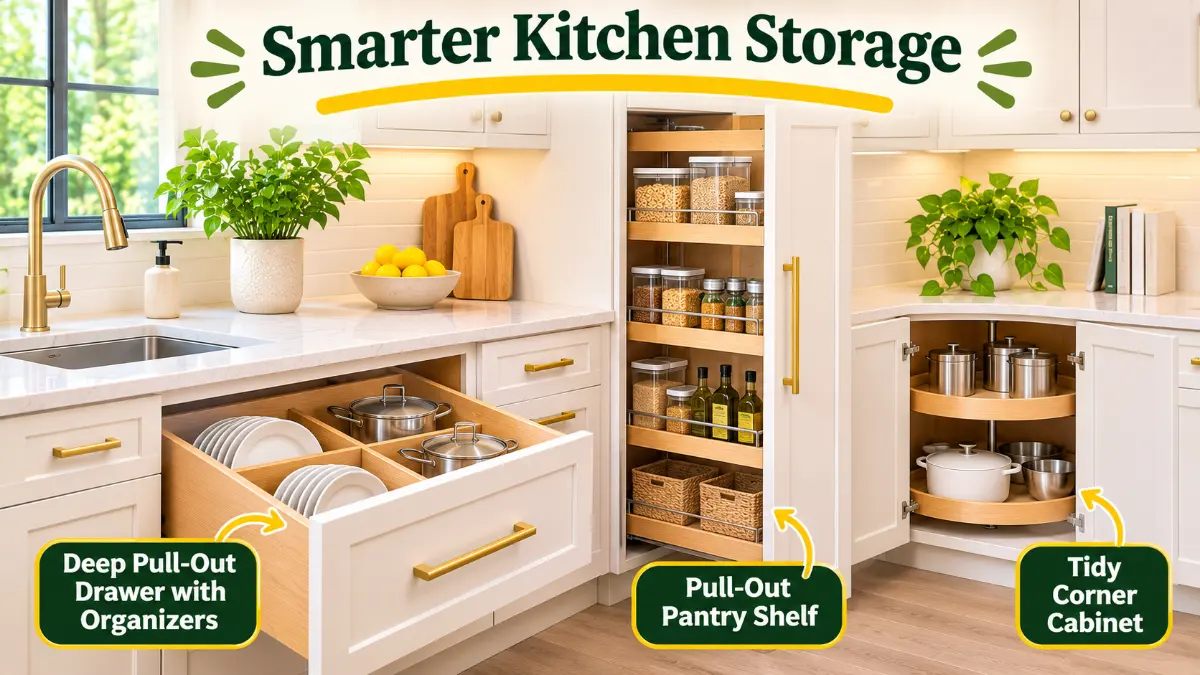
- drawer dividers and deep drawers
- pull-out or sliding shelves in lower cabinets
- door-mounted and wall-mounted racks
- vertical organizers for trays and boards
- labeled containers for dry goods
Pantry organization works best when every item has a designated place. Keep daily-use items within easy reach and rarely used items to one side. Kitchen shelving can add capacity, but keep it tidy. Avoid overfilling so counters stay clear. This is kitchen space management in practice.
Layout and the Work Triangle
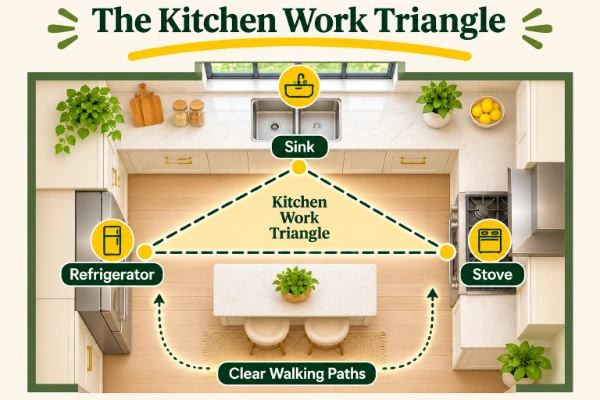
Kitchen layout matters more than finishes. The work triangle links the sink, stove and fridge. Keep paths clear and make sure doors and drawers open fully. Kitchen islands need walkable space on all sides, and in a small kitchen an island can block the triangle. Moving the sink or stove is the costliest change and is rarely necessary.
Make Small Kitchens Feel Bigger
Small kitchen ideas that work:
- Clear counters of everything except daily essentials.
- Use light colors and reflective surfaces.
- Add good lighting, including under-cabinet lights.
- Try open shelving if you will keep it organized.
- Add a narrow rolling cart for extra prep space.
- Keep work zones and walkways clear.
- Limit decorative items.
Kitchen space optimization is mostly about subtraction.
Kitchen Sinks, Faucets and Fixtures
Replace a dripping faucet or an old sink. Look for a sturdy, rust-resistant, easy-to-clean sink in the right size. One Reddit user in the Apartment Therapy roundup said a single-basin kitchen sink fits a full baking sheet and made handwashing easier. Kitchen faucets come in stainless steel, matte black, chrome and brushed finishes, and a pull-down spray eases cleaning. Before buying, check mounting-hole count and spacing and plumbing compatibility. These plumbing upgrades are simple, but leaks and shutoff valves call for a licensed plumber if you are unsure.
Appliances, Fixtures and Ventilation
Choose Energy-Efficient Appliances
Check the condition of existing appliances before replacing anything. Replace worn or inefficient units first, not all at once. Compare size, connection type (gas, electric and water are not interchangeable), installation needs and warranty. Energy-efficient appliances cut bills, and ENERGY STAR says choosing certified kitchen appliances could save about $385 over the products’ lifetime.
NYSERDA, New York’s energy agency, adds specifics:
- Refrigerators are often the most expensive kitchen appliance to run. ENERGY STAR models use about 20% less energy than conventional ones, saving up to $200 a year depending on the model. Consider replacing one over 10 years old. Side-by-side models use 25% more energy.
- Dishwashers: ENERGY STAR models use 30% less energy and 800 fewer gallons of water a year than conventional ones.
- Old units may contain CFCs, so recycle them.
Induction, Gas and Smart Kitchen Technology
ENERGY STAR says certified electric cooking products are about 18% more efficient on average than standard models. Its criteria cover cooktops and ranges, not standalone ovens. Induction cooktops heat compatible cookware directly. About 85% of the energy reaches the cookware, compared with about one-third for gas, according to ENERGY STAR, which cites Frontier Energy. Boiling water can take nearly half the time, and the surface stays cool without cookware. Cookware must be magnetic, so test it with a magnet.
NYSERDA cites a study finding that gas stoves leak pollutants, including carbon monoxide and benzene, even when turned off. Smart kitchen technology, such as connected appliances, is optional. Add it after the basics, and confirm it suits your wiring and apps.
Kitchen Ventilation and Range Hoods
Cooking produces heat, moisture, odors and airborne particles. The EPA says the kitchen needs ventilation and that a range hood is the most common approach. The hood should capture combustion products and vent them directly outdoors. ASHRAE and the Home Ventilation Institute recommend 100 cubic feet per minute for a typical range. Larger fans may need make-up air, which prevents backdrafting of combustion equipment, and a quiet or remote-mounted fan is more likely to be used. Clean grease filters regularly and run the exhaust whenever you cook. A recirculating hood with a clean filter is a fallback where ducting is not possible.
The Department of Energy’s commercial kitchen guidance offers a useful principle: reduce exhaust airflow through good equipment layout and hood design, then consider demand-controlled ventilation.
Flooring and Finishes
Kitchen flooring should be durable and water resistant. Porcelain tile is durable, and luxury vinyl plank handles water well. Hardwood needs care near the sink and dishwasher. The EPA advises choosing flooring that resists water and keeps spilled water from reaching the subfloor. It says not to install carpet near sinks or other chronic moisture areas, and to seal hard or porous flooring near water sources. A peel-and-stick vinyl terrazzo tile lasted four years for Marcel Dagenais in an Apartment Therapy example. Clean floors thoroughly, replace damaged tiles and consider anti-slip mats.
Repaint the Walls and Pick Kitchen Color Schemes
Light kitchen color schemes make a room look bigger and brighter: white, cream, light gray, light green or light blue. Avoid very dark colors in a small space. Wipeable paint suits kitchen walls. Keep the palette simple and add color through removable items such as towels, plants and bowls. Modern kitchen design works best with a neutral base and a few contrasting accents, since too many colors, patterns and finishes make a room feel crowded.
Kitchen Wall Décor and Accessories
Kitchen wall décor and kitchen accessories are cheap ways to add personality: simple picture frames, a wall clock, wooden accessories, colorful towels and fresh utensils. Trim or molding on cabinet tops can look more sophisticated, according to Paul Dore in the Apartment Therapy piece, though trim adds cost.
Add Sustainable Kitchen Improvements
Sustainable kitchen materials and habits start with durable, repairable products. Choose responsibly sourced wood, reusable containers, washable cloths and refillable dispensers. Organizing the refrigerator reduces food waste. Water-saving aerators help if they are compatible with your water pressure. The EPA lists cabinetry made of certain pressed wood products among common indoor pollutant sources, so ventilate during and after installation.
DIY or Hire a Professional
DIY kitchen upgrades suit painting, hardware, peel-and-stick backsplashes, storage organization and light fixture covers. Hire a professional for plumbing, gas, new circuits, wall removal and countertop installation. Get multiple quotes and confirm what each includes. If your home was built before 1978, the EPA says to hire only lead-safe certified renovators, because painted window sashes and frames may contain lead-based paint. Seal gaps around electrical, plumbing and ventilation openings you expose, since cabinet removal can give access to hard-to-reach spaces.
Simple Ways to Keep Your Kitchen Clean and Organized
Kitchen maintenance protects every upgrade:
- Wash dishes after cooking.
- Empty and clean the trash bin regularly.
- Wipe the sink, counter and stove daily, and sweep the floor.
- Keep each utensil category separate.
- Clean the refrigerator, which can develop odors.
- Wipe spice jars and containers.
- Return items to their place after use.
The last of the kitchen upgrading tips mintpalment is a habit: clean a little every day and the room stays looking finished.
Common Kitchen Upgrading Mistakes to Avoid
- Shopping before measuring.
- Shopping without a plan.
- Moving the sink or stove without a real reason.
- Choosing countertops only for looks.
- Skipping ventilation.
- Forcing an island into a small kitchen.
- Using very dark colors in a small kitchen.
- Buying low-quality equipment or oversized appliances.
- Relying on decorative lights instead of task lighting.
- Neglecting storage.
- Prioritizing looks over function.
- Spending the whole budget on finishes.
- Following trends that do not suit the layout.
- Ignoring small repairs.
- Overfilling counters with decor.
Is It Worth Upgrading Your Kitchen?
Usually, if the upgrade fixes a daily problem. Work in stages and let each step prove its value before the next one begins. Skip anything that only follows a trend.
Frequently Asked Questions
What do kitchen upgrading tips mintpalment mean?
Kitchen upgrading tips mintpalment is a search phrase for practical, low-cost kitchen improvement advice. No official program or standard uses the name.
What is the cheapest kitchen upgrade worth doing?
Cabinet paint, new hardware and better lighting. Apartment Therapy’s DIY experts also point to swapping hardware and fixtures and repainting dated counters.
Should I paint my cabinets or replace them?
Paint them if the boxes are sound. Replace cabinets only when they are damaged or the layout cannot work.
Which countertop is best for a busy kitchen?
Quartz is a common all-round choice for easy upkeep, but protect it from excessive heat. Choose by cooking habits, cleaning preferences and budget.
Do I need a contractor for a kitchen upgrade?
Not for painting, hardware or storage. Plumbing, gas, new circuits, wall removal and countertop installation need a professional.
How long does a kitchen upgrade take?
It depends on scope, and the sources checked give no standard timeline. A refresh of paint, hardware and lighting is shorter than a remodel that moves plumbing or gas lines. Ask your contractor for a written schedule.
How much should I budget for a kitchen upgrade?
Set a budget by scope, add installation and delivery, and reserve an extra 1% to 4% for surprises, per Redfin.
Are energy-efficient kitchen appliances worth it?
Often. ENERGY STAR says certified kitchen appliances could save about $385 over their lifetime, and certified refrigerators use about 20% less energy.
Is an induction cooktop better than gas?
Induction is more energy efficient, according to ENERGY STAR: about 85% of its energy reaches the cookware versus about one-third for gas. It needs magnetic cookware.
Which kitchen upgrades do homeowners say are worth it?
Redditors cited by Apartment Therapy praise interior paint, sliding cabinet shelves, motion-sensor lights, soft-close hardware and a single-basin sink.
Conclusion
Kitchen upgrading tips mintpalment work because they start with the problems you actually have. Assess honestly, plan the budget, fix function before appearance and upgrade in stages. A painted cabinet, a bright light, a tidy drawer and a working range hood will change a kitchen more than any trend.