
How to Remove Paint From Brick: Safe Methods and Step-by-Step Guide
Introduction
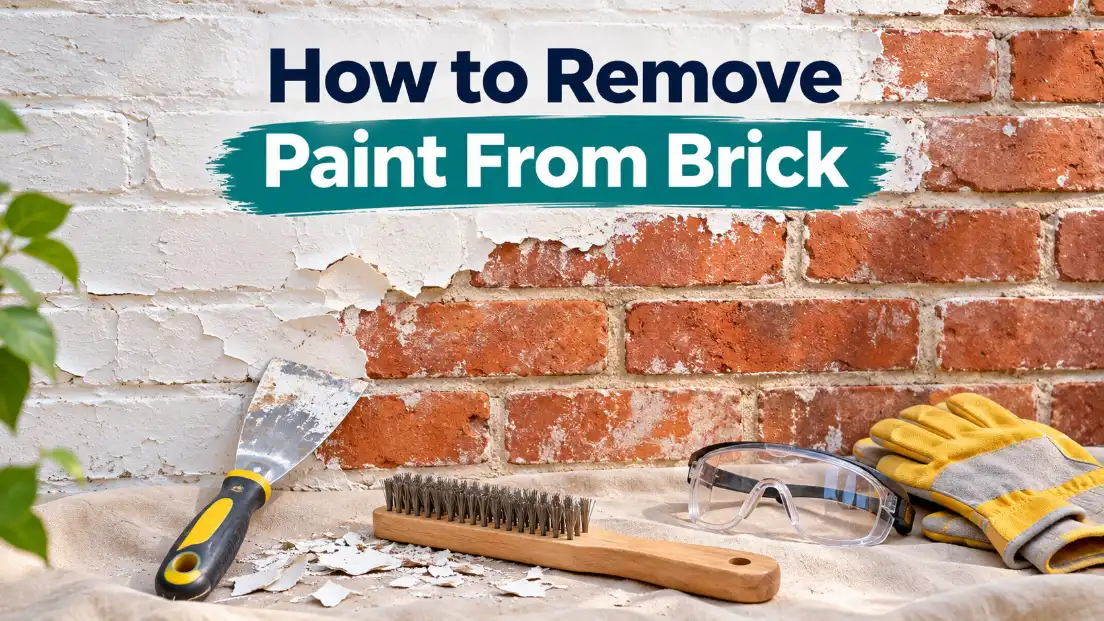
The safest way to remove paint from brick is a gel or paste masonry paint stripper covered with fabric peeling strips, tested on a small patch first. This peel-away method softens paint and lifts it out of the brick pores without grinding the surface, which is why competing guides favor it over sandblasting and pressure washing, and why the Brick Industry Association points to chemical solutions formulated for brickwork. If the house was built before 1978, test the paint for lead before you touch it, because lead-based paint changes every safety step.
In short, how to remove paint from brick comes down to eight moves: test the stripper, protect the area, apply it thickly, cover it with strips, peel, scrub with a stiff brush, rinse at low pressure and let the brick dry. Expect a slow job, and do not expect every trace of paint to come out, because paint settles into porous masonry.
This guide is for homeowners and DIY painters with a painted fireplace, interior wall or exterior brick wall. It covers the methods worth using, the ones to avoid, a step-by-step process, fireplace and exterior jobs, and the ten questions people ask most. Facts on safety and brick damage are checked against official sources, and where sources or competing guides disagree, the disagreement is flagged.
What Is the Safest Way to Remove Paint From Brick? A Quick Answer
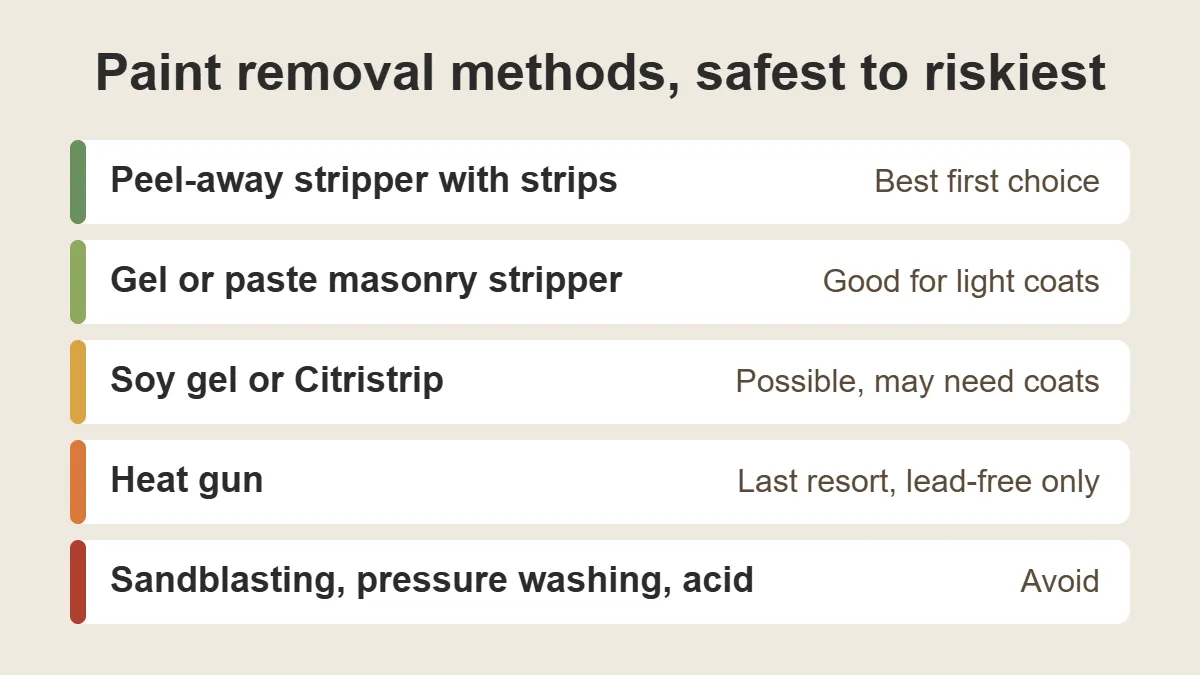
These are the options for how to remove paint from brick, ranked by risk to the brick.
| Method | Verdict | Why |
|---|---|---|
| Peel-away stripper with fabric strips | Best first choice | Softens paint without abrading the brick |
| Gel or paste masonry stripper, scraped and rinsed | Good for light coats | Faster, but leaves more paint in the pores |
| Soy gel or Citristrip | Possible, with patience | Gentler, but may need several coats |
| Heat gun | Last resort, lead-free paint only | Can crack brick if overheated, and heating lead paint releases fumes |
| Sandblasting | Avoid | Brick Industry Association says it damages brickwork |
| Pressure washing | Avoid for paint removal | Pressures needed would be excessive |
| Muriatic acid | Avoid | Can damage brick and dissolve lime mortar |
Should You Remove Paint From Brick at All?
Before you decide how to remove paint from brick, decide whether you should. Stripping is not always the right call. The National Park Service notes that paint is sometimes applied to hide mismatched repairs, soft brick or deteriorating stone, and that many historic buildings were painted at construction or soon after. A test patch can show whether the brick underneath is worth the effort.
Removal makes sense when layers have built up so far that new paint will not stick to a sound surface, or when you want the natural brick back. One competing guide advises asking whether the project is worth doing, because the chance of removing every trace of paint is very low. A New York City Landmarks Commission presentation says properly fired brick does not need a sacrificial coating such as paint, but that document covers one building and is not a general rule.
How Do You Run a Lead Paint Test on Brick?
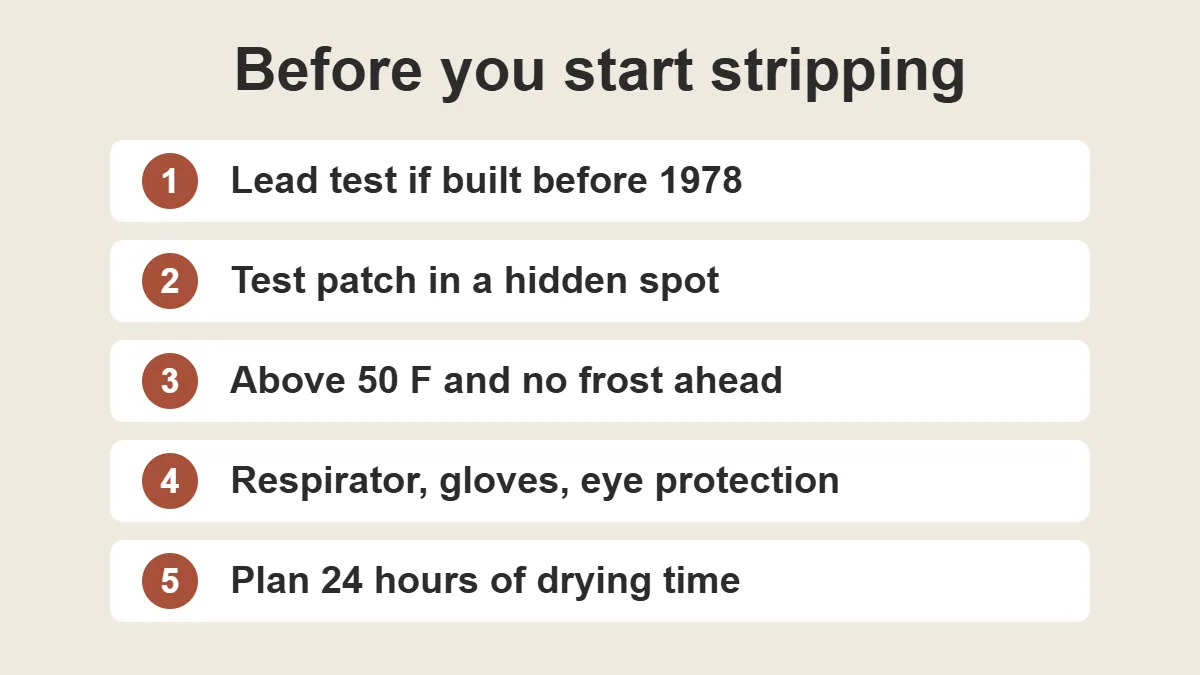
Any plan for how to remove paint from brick on an older house starts with a lead check. Homes built before 1978 may contain lead-based paint, and the EPA says to assume it is present if you cannot determine the age. The EPA recommends a certified lead inspector or lead risk assessor to confirm. Lead paint test brick advice from one competing guide is blunter: test before you start, because stripping does not make the work lead-safe.
Home test kits are a common suggestion, but the EPA page checked for this guide does not discuss them, so treat a kit result as a first screen, not proof. If lead is present or unknown, follow EPA lead safety steps:
- Wear a disposable N-100 certified respirator, disposable coveralls, eye protection and gloves.
- Mist surfaces before scraping and avoid dry sanding.
- Cover floors with plastic sheeting, close windows and turn off forced-air systems.
- Seal waste in heavy plastic bags and check local rules for disposal.
- Keep children out of the work area until cleanup is finished.
- Use a HEPA vacuum and wet disposable cloths for cleanup.
The EPA says its lead-safe contractor rule generally does not apply to homeowners working on their own homes, but it does apply to renters, child care operators and house flippers. For large lead jobs, a certified contractor is the safer route.
Which Methods Should You Avoid?
Every shortcut for how to remove paint from brick that relies on force instead of chemistry risks permanent brick surface damage.
Sandblasting
Sandblasting brick damage is well documented, and sandblasting damage cannot be undone. The Brick Industry Association says abrasive methods such as sandblasting are not recommended because the process damages the brickwork. One competing guide says removing the hard outer layer leaves brick more vulnerable to moisture and freeze-thaw damage. The NPS adds that blasting can roughen the surface, crack it below the face and erode lime mortar joints, which can make up to about 20 percent of a brick wall. One competing guide notes professional sandblasting also throws off dust, a lead concern.
Pressure Washing
Pressure washing brick damage comes from force, not from water alone, and pressure washing damage can include eroded faces and soaked mortar. The Brick Industry Association says pressure washing is not recommended for removing paint because the pressures needed would be excessive, though low-pressure washing is fine for general cleaning. For historic masonry, the NPS suggests starting at 100 psi or below and going no higher than about 300 to 400 psi, and says to watch the runoff for sand grains, a sign the pressure is too high. A New York City Landmarks Commission presentation cautions that high-pressure water may erode soft brick.
Sanding, Wire Brushing and Vinegar
Sanding wears away the brick face. One competing guide says a wire brush drill attachment is possible if used carefully and tested first, since aggressive brushing can scar brick. The same guide says vinegar and similar DIY hacks are mild and rarely work well.
Muriatic Acid and Harsh Chemicals
The Brick Industry Association says not to use diluted or undiluted muriatic acid, and warns that unbuffered acids can cause staining and damage that cannot be repaired. The NPS says hydrochloric acid can dissolve lime mortar and leave chloride deposits. Caustic strippers can also burn the surface and leave salts that are hard to rinse out.
What Tools and Materials Do You Need?
A chemical paint stripper for masonry is the main item. Check that the label lists brick.
- Masonry paint stripper in gel or paste form
- Fabric peeling strips or the covering paper the product requires
- Work gloves, protective glasses and a respirator
- Drop cloths or plastic sheeting
- Painter’s tape
- Trowel or the tool the manufacturer specifies
- Plastic scraper
- Stiff-bristled brush and small detail brushes
- Garden sprayer or hose for a low-pressure rinse
- pH test strips and a neutralizer if the label calls for one
How to Remove Paint From Brick With a Peel-Away Paint Stripper
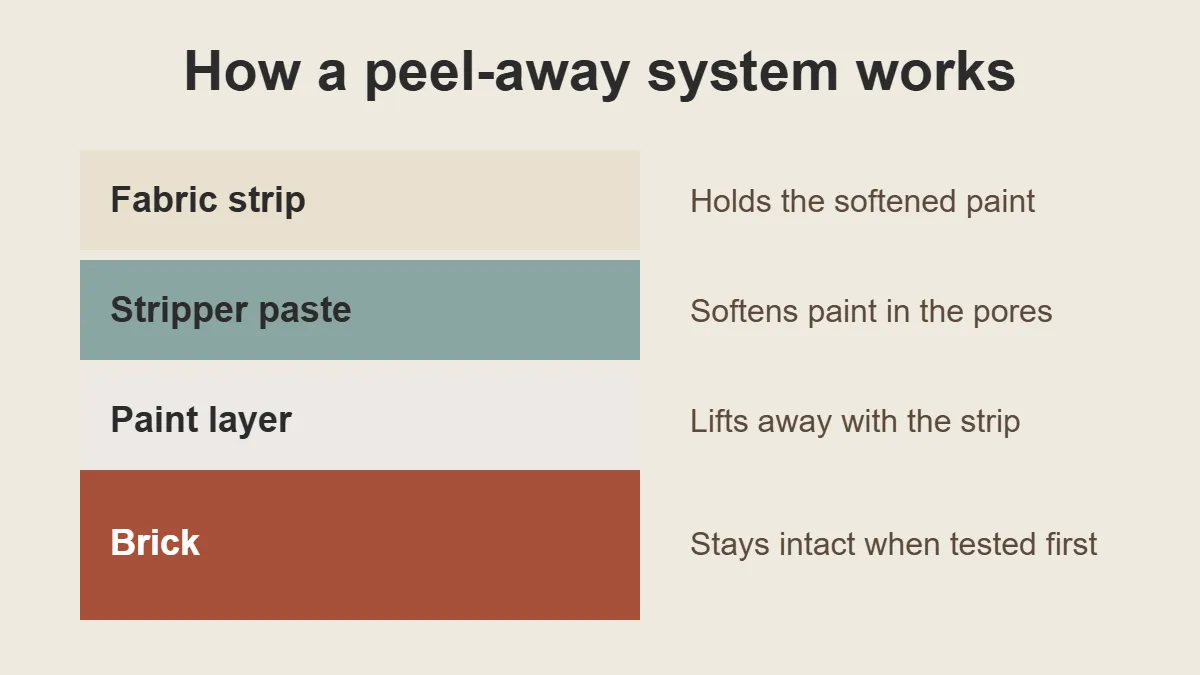
A peel-away paint stripper is a poultice paste. In NPS terms, a poultice is an absorbent material mixed with a remover into a paste that draws material out of the masonry as it dries. Fabric peeling strips hold the softened paint so it lifts away in sheets instead of a slurry. Bob Vila recommends gel or paste strippers with fabric peeling strips for old brick, and Money Pit calls a peel-away chemical stripper the gentlest option it endorses, though slow.
Step 1: Test the Paint Stripper
Choose a paint stripper for brick that lists masonry on the label. Pick an inconspicuous spot and apply the stripper exactly as the label says. This test patch shows whether the product works on your paint, how long it takes and whether the brick is damaged. The NPS suggests starting with a patch as small as six square inches, expanding it to include several bricks and mortar joints for larger projects, and judging the result only after the brick has dried. The Brick Industry Association also advises testing on a mock-up and keeping it until the job ends.
Step 2: Protect Yourself and Your Work Area
Lay drop cloths or plastic sheeting at the base of the wall and tape it down. Cover trim with painter’s tape. Wear gloves, protective glasses and a respirator, and ventilate well indoors. Do not strip in cold weather. The NPS says chemical cleaning should never be done below 40 degrees F and generally not below 50, and Bob Vila advises avoiding the job within about a month of expected freezing, since brick that has not dried can be damaged by frost.
Step 3: Apply the Masonry Paint Stripper
Scrape off any loose paint first, wetting it if it may contain lead. Spread the gel or paste with a trowel, pushing it into the crevices and mortar joints. Build it to the thickness the manufacturer specifies. One competing guide notes regular stripper can be hard to keep workable on brick, so a thick, even coat helps.
Step 4: Position the Paint Removal Strips
Press paint removal strips for brick onto the stripper and hold them until they adhere. Overlap the strips so no brick shows. Each peel away paint stripper has its own strip or covering paper, so use the one the label names. Then wait the time on the label. Dwell times disagree between guides: one competing guide gives 10 to 60 minutes for a standard masonry stripper, while Bob Vila says a peel-away on several paint layers may need a full 24 hours. Follow your product label, not either guide.
Step 5: Remove the Strips and Scrub
Lift the strips slowly and peel rather than tear. Loosen stubborn spots with a trowel, then scrape leftover paint with a plastic scraper. Scrub with a stiff brush and rinse with a low-pressure rinse. A plastic scraper is gentler on soft brick than metal.
Step 6: Neutralize, Rinse and Let the Brick Dry
Neutralizing is where sources disagree. The Brick Industry Association says to neutralize after using paint strippers, and the NPS says alkaline removers need an acidic neutralizing wash and a pH check with test strips. PROSOCO, however, says its SafStrip gel does not require neutralization. Follow the label of the exact product, rinse thoroughly, and confirm with pH testing if you plan to repaint or seal. Then let the brick dry. The Brick Industry Association says to wait at least 24 hours, and longer if it rains or the air is humid.
Step 7: Repeat on Stubborn Spots
Most jobs need a second round. Repeat the stripper on remaining spots, using a finer tool each time so you do not scar the brick.
Is There a Masonry Paint Remover With Official Specs?
PROSOCO SafStrip is the one product among the official sources with a product page. Facts from that page:
- It is a clear gel for masonry, concrete, wood and metal.
- It removes most paints and clear coats, including acrylics, alkyds and clear sealers.
- It contains no methylene chloride or methanol, has a flash point above 200 degrees F and a pH of 2.15.
- Maximum VOC is 30 percent, and coverage is 25 to 50 square feet per gallon, depending on the surface.
- Spent stripper rinses off with cold or hot water, and neutralization is not required.
- Not listed: dwell time, protective equipment, lead paint guidance and price. Access is limited to approved distributor accounts, so it may not be sold at a hardware store.
Treat it as an example of what a professional masonry stripper looks like, not a mandate. Other brands have their own labels.
How to Remove Paint From Brick Without Chemicals: Is a Heat Gun Safe?
You can remove paint from brick without chemicals using a heat gun, but it is the riskiest of the common options. Heat gun paint removal brick work goes one small section at a time: heat until the paint bubbles, then scrape with a 1 inch putty knife. One competing guide says brick can crack if overheated and that heat may not loosen paint enough on masonry.
Lead is the larger concern. Bob Vila says not to use heat on lead paint because re-melting it can release harmful fumes, and Craft Thyme gives the same warning. The EPA takes a narrower position: it says to use only a low-temperature heat gun, under 1,100 degrees F, when removing paint in lead-safe work. Because the guidance differs, the safe rule is to skip the heat gun unless the paint is known to be lead-free.
Do Soy Gel and Citristrip Work on Brick?
A soy gel paint stripper is a less harsh option often suggested for brick. One competing guide says it works on oil and latex paint, may need multiple coats and is harder to find, and that biodegradable stripper does not make the removed paint biodegradable. Citristrip brick results are mixed: it is easy to buy and better on latex paint, but the same guide says reviewers rated it poorly on brick. Bob Vila names Citristrip and SmartStrip as popular gentle strippers and calls them similarly effective. Both are common answers to how to remove paint from brick gently, but neither claim is an official spec, so test a patch before buying a gallon.
How Do You Deal With Paint in Brick’s Pores, Nooks and Mortar Joints?
Paint in brick pores is the reason no method gets every trace out. Paint settles in the uneven pores of brick and in the mortar joints, where scrapers cannot reach. After the strips come off, use small nylon or wire detail brushes, a second peel-away application, or a low-pressure rinse. Avoid a pressure washer to chase stubborn spots. Go gently on mortar, because lime mortar joints erode easily and erosion lets more water into the wall. The Brick Industry Association says to repoint mortar that is deteriorated, loose, missing or cracked wider than a business card, and to leave exterior repointing to an experienced mason.
How to Remove Paint From Brick Fireplace Surfaces
For a painted fireplace, how to remove paint from brick fireplace walls follows the same peel-away steps, with indoor precautions. Ventilation matters most: open windows and keep children and pets away. One competing guide suggests eco-friendly strippers for indoor jobs such as fireplaces, and says a single fireplace wall can take several hours, sometimes spread over days. Cover the floor and hearth, and tape the mantel and surrounding drywall.
How to Remove Paint From Brick Exterior Walls
To remove paint from brick exterior walls, work on one section of the exterior brick wall at a time and plan around weather. Check the forecast for dry days above 50 degrees F, and avoid starting within a month of freezing. Wet brick left in cold weather can be damaged by frost. Keep the rinse at low pressure and let the wall dry fully before repainting or sealing. One competing guide says large exterior jobs are usually better left to professionals, and the EPA advises a certified contractor for lead-paint work in pre-1978 homes.
What Safety Tips Should You Follow When Using Paint Strippers?
How to remove paint from brick safely depends as much on protection as on the product.
- Ventilate the area and wear a respirator, gloves and eye protection.
- Read the full label and never mix products.
- Keep children and pets away.
- Protect surrounding surfaces with drop cloths and painter’s tape.
- Collect waste and follow the label and local rules for disposal.
How Long Does It Take to Remove Paint From Brick?
A small interior wall can take several hours or days. A large exterior wall takes much longer. Multiple paint layers, the stripper’s dwell time and repeat applications all add time, and the brick needs at least 24 hours to dry afterward. No source checked gives a firm schedule, so plan around your test patch.
What About Efflorescence, Staining and Repainting Brick?
Whatever you choose for how to remove paint from brick, expect a cleanup phase. Cleaning can draw soluble salts to the surface, leaving a powdery white efflorescence, and the NPS notes inadequate rinsing can leave whitish deposits. The Brick Industry Association says to remove efflorescence and check that it does not return before treating the brick. Harsh strippers and acids create staining risk, which is one more reason to test first.
Repainting brick is possible once the brick is clean, neutral and dry. The Brick Industry Association says to remove existing treatments before applying a new one and to make sure the surface is chemically neutral first. One competing guide warns that painting over flaking paint can trap moisture and cause more peeling.
Conclusion
Knowing how to remove paint from brick safely means choosing the gentlest method that works: a peel-away or gel masonry stripper, tested first, with lead checked before you begin. The goal is to strip paint off brick without damaging it, so skip sandblasting, high-pressure washing and acids, and accept that some paint will stay in the pores. Prepare for a slow, careful job, and hire a professional for large or lead-painted walls.
FAQs
What is a good paint remover for brick?
Look for a gel or paste stripper made for masonry, ideally one used with peeling strips. The Brick Industry Association says most coatings need a proprietary chemical formulated for brickwork. Test it on a hidden patch first.
Can you restore brick after it’s been painted?
Often, but not perfectly. The Brick Industry Association says paint can be very difficult to remove without damage, and some paint stays in the pores. A test patch will show how the brick looks underneath.
Does WD-40 remove paint from brick?
No source checked recommends it, so do not rely on it. No source checked lists it as a masonry paint stripper, and one competing guide says DIY hacks rarely work well on brick. Use a stripper made for masonry.
What is the best thing to remove paint with?
For brick, a masonry paint stripper with fabric peeling strips. It lifts paint without abrasion, unlike sandblasting or a power washer, which can damage the brick.
What is the easiest way to remove paint from bricks?
A gel or paste stripper brushed or troweled on, covered with a peeling strip and peeled off, is the easiest safe method. It is still slow work, and stubborn spots need a second round.
How to get rid of old paint on bricks?
Test for lead if the home predates 1978, then test a stripper on a hidden patch. Apply it, wait the label time, remove the strips, scrub with a stiff brush, rinse at low pressure and let the brick dry at least 24 hours.
Can I paint over already painted brick?
Yes, if the old paint is sound. Scrape and clean flaking paint first, because painting over it can trap moisture and cause more peeling. The Brick Industry Association says to remove existing treatments before applying a new one.
How can I make old brick look new again?
Use the least aggressive method that works. Clean gently, remove efflorescence and repoint cracked or missing mortar. Avoid sandblasting and high-pressure washing, which damage the face of the brick.
Does brick deteriorate if painted?
The official sources checked do not say paint itself destroys brick. A New York City Landmarks Commission presentation says properly fired brick does not need paint, and one competing guide says paint over flaking layers can trap moisture. Aggressive removal methods are the better-documented source of damage.
What is the best paint remover for bricks?
No official source ranks brands. Choose a masonry stripper that suits your paint type, such as PROSOCO SafStrip, which lists acrylics and alkyds but is sold only through approved distributors, or a peel-away system. Test it first and follow the label for dwell time and neutralizing.