Best Paint for Wood: Top Picks for Furniture, Trim and Outdoor Projects
Introduction
The best paint for wood depends on where the wood lives. For interior wood such as trim, doors, cabinets and furniture, use a waterborne alkyd enamel in satin or semi-gloss over the right primer. For outdoor wood, use a quality exterior acrylic latex over exterior primer, and keep alkyd or oil-based paint for exterior trim. For furniture you want to paint with less prep, an all-in-one paint such as Fusion Mineral Paint, or a spray paint over a bonding primer, can work well.
Benjamin Moore Advance and Sherwin Williams Emerald Urethane Trim Enamel are the main interior and trim picks in this guide, and the best paint for wood furniture is usually one of them or an all-in-one paint. Wolman Outdoor Furniture Paint is the outdoor furniture pick with a verified official page. Paint choice matters less than prep, though. Clean wood, a primer that suits the surface and enough cure time decide whether the finish lasts.
This guide helps you pick the best paint for wood by project. It compares official specs, explains each paint type and sheen, covers outdoor wood and furniture, and answers the ten questions people ask most. Every verified product fact comes from a manufacturer page, reviewer claims are labeled as such, and anything the official pages do not state is flagged.
What Is the Best Paint for Wood? A Quick Answer
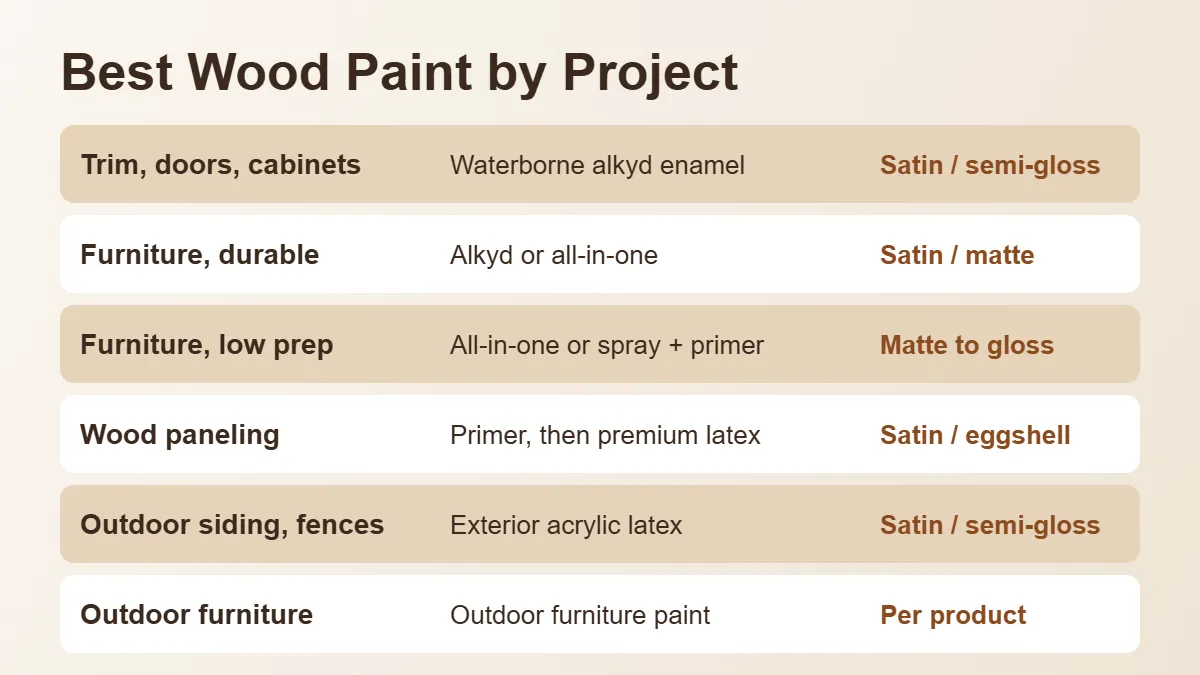
| Project | Best choice | Typical sheen |
|---|---|---|
| Wood trim, wood doors, wood cabinets | Waterborne alkyd enamel | Satin or semi-gloss |
| Wood furniture, durable finish | Waterborne alkyd or all-in-one paint | Satin or matte |
| Wood furniture, minimal prep | All-in-one paint, or spray paint over bonding primer | Matte to gloss |
| Wood paneling | Primer for the paneling type, then premium latex or alkyd | Satin or eggshell |
| Outdoor walls, siding, fences | Exterior acrylic latex over exterior primer | Satin or semi-gloss |
| Outdoor trim | Exterior alkyd or acrylic enamel | Semi-gloss |
| Outdoor furniture | Water-based outdoor furniture paint | Flat to satin, per product |
What Makes a Paint Good for Wood?
Wood moves, absorbs moisture and gets knocked, so the best paint for wood needs six qualities.
- Adhesion: the paint must grip the surface, and adhesion usually depends on cleaning, scuffing and primer more than on the topcoat.
- Durability and scratch resistance: furniture, doors and cabinets take daily contact, so the cured film should be hard.
- Self-leveling: the paint should flow out so brush marks fade as it dries.
- Moisture resistance and weatherproofing: outdoor and kitchen wood faces water and humidity.
- UV resistance: sun fades color and breaks down weak coatings outdoors.
- Low VOC: lower solvent content is easier on indoor air.
Sherwin Williams describes good exterior paint by its color and gloss retention, flexibility through expansion and contraction, and mildew resistance. Those traits suit wood well, because wood swells and shrinks with the weather.
Why Use Water-Based Paint?
Water-based paint dries faster, cleans up with soap and water, and gives off less odor. That is why the best paint for wood is usually water-based, and Sherwin Williams says latex offers the longest-lasting finish with the best gloss retention outdoors. UK decorators add that tightening chemical rules are phasing out oil-based paint, and that modern water-based products now match older oil finishes for most jobs.
Water-based paint has limits. Its early formulas were weaker, and some still need a specific undercoat or primer on bare wood. Water-based paint is also a poor match for raw tannin-rich wood without the right primer, because stains can bleed through. Treat water-based as the default and check the primer rules on the can.
What Are the Disadvantages of Water-Based Paint?
Water-based paint can show lap marks if it dries too fast, it may raise the wood grain on bare wood, and weaker formulas scratch more easily. The best water-based paint for wood avoids most of these problems by using an alkyd or urethane-modified resin and by being applied over primer.
When Not to Use Water-Based Paint?
Avoid ordinary water-based paint over raw tannin-rich wood without a stain-blocking primer, over wet or rotten wood, and on surfaces where you cannot confirm what the old coating is. BEHR advises checking whether the existing coating is oil-based or water-based before you start.
Can I Paint Wood White Without Sanding?
You can, but white is the least forgiving color. It shows yellow tannin bleed, dirt and grain texture, so clean the wood well, scuff it lightly and use a stain-blocking primer.
Do I Need to Prime Wood Before Painting White?
Yes. Primer blocks stains and knots, evens the surface and helps the white cover in fewer coats. Without primer, white often needs extra coats and still looks patchy.
Different Types of Paint for Wood
Each paint type changes what the best paint for wood looks like on a given project.
Acrylic Paint and Acrylic Latex Paint
Acrylic paint for wood is water-based, flexible and available in many sheens. Acrylic latex paint is the standard for walls and exterior wood, because it resists fading and cracking. It is the safest starting point for large outdoor surfaces.
Oil-Based Paint
Oil-based paint for wood cures hard and levels smoothly, and Sherwin Williams notes that oil or alkyd has good adhesion, durability and stain resistance and suits exterior trim. It dries slowly, smells strongly and needs mineral spirits for cleanup. Many furniture painters avoid it indoors for those reasons.
Waterborne Alkyd Enamel
Waterborne alkyd enamel combines easy water cleanup with a hard, self-leveling finish. Benjamin Moore Advance and Sherwin Williams Emerald Urethane Trim Enamel belong here. It is the most common answer for trim, doors, cabinets and furniture where a smooth, tough film matters.
Enamel Paint
Enamel paint for wood is a hard-wearing paint that dries to a smooth, durable film. The word covers oil-based, alkyd and acrylic products, so read the label for the resin. Exterior enamel suits railings, doors and trim that take heavy wear.
Spray Paint and Aerosol Paint
Spray paint gives a smooth, brush-mark-free finish on furniture and detailed pieces. It needs thin coats, a well-ventilated space and usually a bonding primer for adhesion.
Chalk Paint and Milk Paint
Chalk paint for wood furniture gives a flat, matte, vintage look and often needs wax or a topcoat for durability. Milk paint gives a chippy, aged finish and takes more practice. Both suit decorative furniture more than hard-wearing trim.
All-in-One Paint
All-in-one paint for wood combines primer, color and topcoat in one product. It is the paint most closely linked with no-sand paint projects, but adhesion on slick surfaces still improves with cleaning and scuffing.
The Different Finishes Available
Sheen changes how the best paint for wood looks and wears. The terms below mix US and UK words, so the table links them.
| US term | UK term | Look | Best wood use |
|---|---|---|---|
| Flat or matte | Matt | No shine, hides flaws | Paneling, low-traffic walls |
| Eggshell | Eggshell | Soft glow | Low-traffic trim and furniture |
| Satin | Satinwood | Smooth, mid sheen | Trim, doors, cabinets, furniture |
| Semi-gloss | Silk or semi-gloss | Shiny, very wipeable | Trim, doors, cabinets, outdoor trim |
| Gloss | Gloss | High shine | Hard-wearing trim and accents |
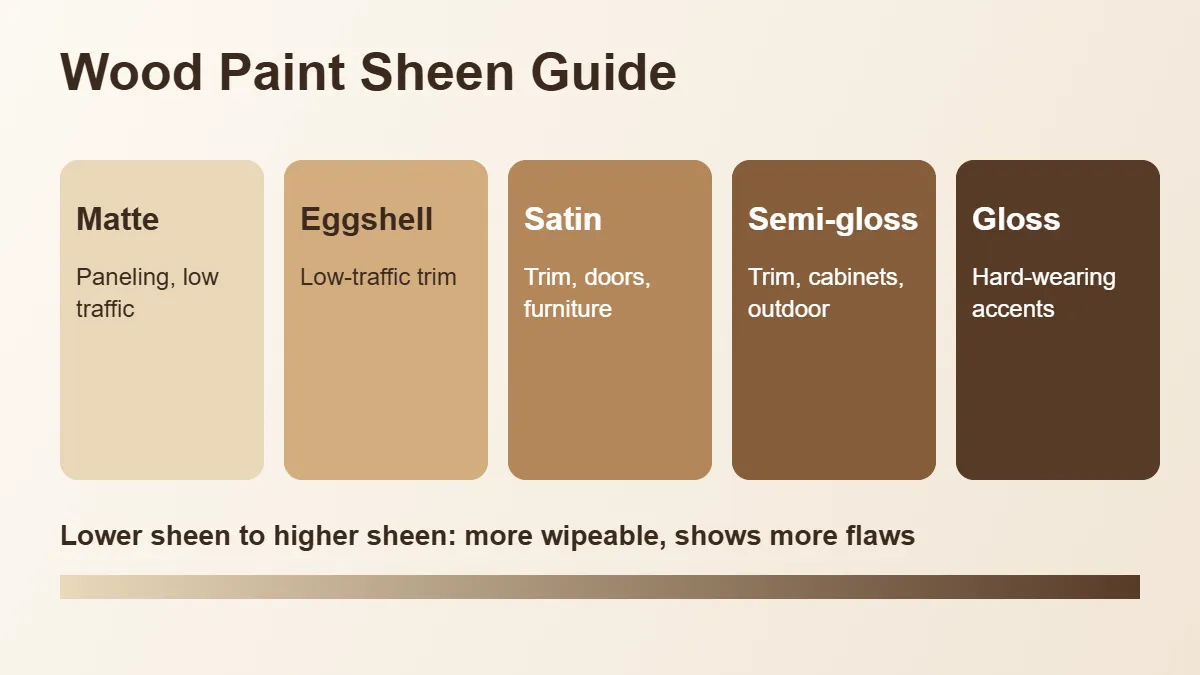
Matt and Flat Finish
A matte finish hides wall and wood flaws, and UK decorators suggest it for old, knocked woodwork. It scuffs more easily on doors and windows and is harder to wipe clean.
Eggshell Finish
Eggshell sits between matte and satin. UK decorators describe it as about 20 percent sheen, and more durable than matt.
Satinwood and Satin Finish
Satin is a middle ground that wipes clean and hides flaws better than semi-gloss. UK decorators describe satinwood as about 40 percent sheen and a favorite for trim.
Semi-Gloss and Gloss Finish
Semi-gloss and gloss shed water and clean easily, which suits trim, doors and cabinets. They also highlight dents and brush marks, so prep needs to be good.
The Best Water-Based Matt, Eggshell, Satinwood and Gloss for Wood
The best water-based paint for wood differs by finish, and UK decorator reviews name specific products for each. These are UK trade products, and their specs were not checked on manufacturer pages for this guide.
The Best Water-Based Matt Paint to Use on Wood
A UK decorator reviewer rates Tikkurila Intact as a near-matt, around 8 percent sheen, that works on woodwork with its own primer. Treat that as one opinion.
The Best Water-Based Eggshell Paint to Use on Wood
The same reviewer picks Crown Trade Fastflow, an alkyd emulsion, praising its flow and open time. Note that a product described as water-based can still contain a small amount of alkyd oil, so read the label.
The Best Water-Based Satinwood
WRX Satinwood
Reviewers describe it as a budget trade satinwood that can go over old oil-based paint without a separate primer, but is poor over caulk or filler, which should be spot-primed.
Benjamin Moore Scuff X
Reviewers describe it as a premium satinwood that usually goes on without an adhesion primer in two coats, but with no bright white offered. Some commenters disagree about skipping primer, so follow the can.
The Best Water-Based Gloss
One UK reviewer rates Teknos Futura Aqua 90 as the only water-based gloss comparable to oil-based gloss, and says it needs an undercoat. Good water-based gloss remains scarce in that market.
Best Paint for Wood: Top Recommendations
Benjamin Moore Advance
Official page facts for Advance Interior Paint, satin, 1 gallon:
- Resin: waterborne alkyd
- VOC: listed as under 50, with the page calling it low VOC even after tinting
- Coverage: 400 to 500 square feet per gallon
- Recoat time: 16 hours, one or two coats
- Surfaces: brick, drywall, plaster and wood
- Uses listed: cabinets, doors and trim, plus bathroom, kitchen and living room
- Interior use only on this satin page
- Price shown: $88.99 for one gallon
- Claims: cures to a hard, furniture-quality finish, resists scratching, scrubbable
- Not listed: dry-to-touch time and full cure time
Benjamin Moore’s own guide to painting wood paneling names Advance as easy to apply and curing to a durable, furniture-quality finish. The Benjamin Moore high gloss Advance listing is titled interior and exterior, but its page was not fetched for this guide, so confirm its outdoor suitability on the can before using it outside.
Sherwin Williams Emerald Urethane Trim Enamel
Official page facts:
- Resin: water-based urethane-modified alkyd
- Sheens: gloss, satin and semi-gloss
- Use: interior and exterior doors, trim, cabinets and windows
- Claims: resists yellowing, hard durable finish, good blocking resistance, lifetime limited warranty
- VOC: under 50 g/L on the product data sheet
- Not listed: coverage, dry time, recoat time, cure time, primer rules and price
Furniture is not mentioned on the official page. One competitor claims a 30 day cure for maximum hardness, but the official sources do not confirm it, so this guide does not repeat it.
Fusion Mineral Paint
Fusion describes its paint as 100 percent acrylic with an exceptional matte finish and minimal prep. The page has a “No Top Coat Required” heading without explanation and also sells separate topcoats. VOC, cure time, coverage figures, price and outdoor suitability are not listed. Reviewers name it as the best paint for wood furniture when prep time is short, reporting that it is durable and usable after a few days, but those are third-party claims.
Beyond Paint All-in-One Refinishing Paint
Reviewers describe it as a thick, all-in-one formula that suits laminate and veneer. Its official page was not part of the verified sources, so no specs are quoted. Check the label for adhesion and sheen details.
Heirloom Traditions All-In-One Paint
Reviewers describe a matte to satin finish with good adhesion on glossy pieces and weaker self-leveling. Official specs were not verified.
General Finishes Milk Paint
One reviewer says this product is an acrylic all-in-one rather than a true milk paint. Its availability is limited, and official specs were not verified.
Annie Sloan Chalk Paint
Reviewers split on it: one calls it overhyped and too expensive, another recommends chalk paints only for decorative work. Chalk paint generally needs a topcoat for durability.
Behr Chalk Decorative Paint
Reviewers describe custom color matching but weak durability without a topcoat.
Rust-Oleum Chalked Furniture Paint
Reviewers call it cheap and accessible, with a thin formula that showed wear even after polycrylic sealing. No official price or spec was verified.
Wolman Outdoor Furniture Paint
Official page facts from Rust-Oleum:
- Water-based outdoor paint for wood furniture, flat finish
- Coverage: up to 20 square feet per quart with two coats
- Colors: 10 tintable and 4 premixed colors
- Application: 3/8 inch nap roller or synthetic brush
- Surfaces: wood furniture such as weathered picnic tables and wooden playsets
- New or sealed wood decks should weather at least six months first
- Prep uses Wolman DeckStrip or Deck and Fence Brightener, depending on wood condition
- Not listed: dry time, VOC and price
Among the sources checked, it is the only outdoor furniture paint with a full official page.
PPG SPEEDPRO Interior and Exterior Latex
The PPG page only announced that PPG Paints is becoming Pittsburgh Paints and redirected to a new site. It listed no finishes, wood suitability, coverage or dry times, so none are quoted here.
Best Paint for Outdoor Wood
What Makes a Paint Good for Outdoor Wood?
The best paint for outdoor wood needs UV resistance, flexibility through weather swings, moisture resistance and mildew resistance. Sherwin Williams lists color retention, gloss retention and flexibility as the key exterior traits, and adhesion and weatherproofing depend on the primer as much as the topcoat. BEHR says to always use primer on exterior projects, and to check whether the existing coating is oil-based or water-based before starting.
Latex or Alkyd for Outdoor Wood
Sherwin Williams says latex lasts longest and holds gloss best, while oil or alkyd suits exterior trim. In practice, use exterior acrylic latex on siding, fences and sheds, and an exterior alkyd or acrylic enamel on trim and doors.
Outdoor Wood Paint Options Reviewers Name
Competitors name several exterior lines. None of these were checked on official pages, so no specs are quoted, and one competitor’s unnamed three-year test cannot be verified.
- Sherwin Williams Duration Exterior Acrylic Latex: described as fade resistant.
- Sherwin Williams Emerald Exterior Acrylic Latex: described as a top-tier line.
- Benjamin Moore Aura Exterior: described as a premium line with color retention technology.
- Benjamin Moore Regal Select Exterior: described as a mid-tier option.
- Behr Premium Plus Ultra: paint and primer in one, though the reviewer prefers separate primer on raw wood.
- Behr Marquee Exterior: described as a premium line.
- Rust-Oleum Stops Rust Protective Enamel: suited to metal parts and detail work rather than large wood surfaces.
- PPG Permanizer: described as fade resistant, but the PPG page could not be verified.
- Behr Pro E600: described as contractor-grade.
Best Paint for Outdoor Wood and Different Surfaces
- Wood furniture: Wolman Outdoor Furniture Paint is the verified outdoor furniture option.
- Decks: use a product made for horizontal, foot-traffic surfaces, because ordinary wall paint wears quickly.
- Fence: exterior acrylic latex, applied after cleaning and priming bare wood.
- Sign: exterior enamel in semi-gloss for a weather-shedding face.
- Bench: exterior acrylic enamel, with a third coat on seats.
- Railings: exterior acrylic enamel in semi-gloss or gloss.
- Sheds: exterior acrylic latex for walls and enamel for doors.
- Steps: a non-slip product made for steps, since smooth enamel gets slippery wet.
- Trim: exterior alkyd or acrylic enamel in semi-gloss.
Best Paint for Wood Furniture Without Sanding
Can You Paint Wood Furniture Without Sanding?
Yes, with limits, and the best paint for wood without sanding is an all-in-one paint or a bonding primer under a durable enamel. Clean the piece, use a bonding primer on slick or glossy surfaces, and choose a paint built for adhesion, such as an all-in-one product. Competitors disagree on sanding: one says to always sand for the best bond, another calls light sanding optional, and a third says the no-sanding title conflicts with its own steps. A quick scuff with 220 grit sandpaper is the safest middle path, whichever product you pick.
Pros and Cons of Painting Without Sanding
| Pros | Cons |
|---|---|
| Less mess and dust | Higher adhesion risk |
| Faster and less physical work | Paint choices are narrower |
| Good for detailed pieces | Surface flaws show more |
| Keeps the original finish | Cure times can be longer |
Best Spray Paint for Wood Furniture
Spray paint suits furniture with spindles, carvings and detail, where brushes leave marks. The best spray paint for wood furniture depends on adhesion more than color. The findings below come from one informal test of six aerosol paints and two primers on a single worn coffee table, so treat them as one data point, not a ranking.
Do You Need Primer for Spray Paint?
Usually yes, because primer matters more than brand when choosing the best paint for wood by spray. In that test the unprimed sections scratched the most, and bonding or shellac-based primers improved every result. Shellac primer generally performed better than the other primer tested.
Spraying Paint on a Wooden Table
The tester taped three sections per paint: no primer, shellac primer and a second bonding primer. Scratch tests ran at 7 and 46 days. Primer sprayed too close to the tape lifted when the tape came off, so keep primer edges clear of tape lines.
Best Coverage Aerosol Paint
The reviewer found coverage differed by brand. Color Place needed more cans because its coverage was weaker. Official coverage figures were not verified, so check each can for square feet per can.
Spray Paint Sheens
All six paints were labeled gloss, but Behr, Rust-Oleum 2X and Krylon Color Maxx looked glossier on the wood. Flat sprays exist for some brands, so check the can before you buy.
Krylon Fusion Review
It improved considerably with primer by day 46, and the no-primer section held up only slightly worse. It sprayed less evenly than some rivals.
Rust-Oleum Gloss Protective Enamel Review
Rated a top contender over shellac primer, with 50 or more colors, but it sprayed less evenly.
Behr Premium Review
Named probably the best overall, with 20 colors in gloss or flat. It performed poorly without primer but well over either primer.
Rust-Oleum 2X Ultra Cover Review
It sprayed well, but the reviewer judged other options more durable.
Krylon Color Maxx
Praised for spray quality and a glossy finish, with 50 or more colors.
Color Place Scratch Test
The cheapest option surprised the tester with strong durability, even without primer. It comes only in black or white and only in gloss.
Can You Spray Paint Wood Furniture Without Sanding?
Yes, but only with a bonding primer. Areas worn to bare wood held paint better than areas with the original finish intact, so for durability sand lightly and prime first.
How to Spray Paint Wooden Furniture
Clean the piece, scuff it with 220 grit sandpaper, prime, spray two light coats and add a compatible clear topcoat for durability. The test did not include a topcoat, so its results likely understate how durable a full system can be.
Best Paint for Wood Furniture by Type
How to Choose Paint for Furniture
Choose by durability, sheen, VOC level and whether the piece needs primer. Wall paint is not made for furniture hardness, so pick an enamel, an all-in-one paint or a waterborne alkyd.
Best Chalk Paint
Chalk paint for wood furniture suits decorative pieces where a vintage look matters. One reviewer ranks chalk paints among the least durable options, so seal them with wax or polycrylic.
Best All-Around Paint
Fusion Mineral Paint is the all-around pick in the reviews checked. Its official page describes a matte, 100 percent acrylic paint with minimal prep.
Most Durable Paint
Benjamin Moore Advance is the most durable pick among these. Its official page lists a hard, furniture-quality cure and a 16 hour recoat, though one reviewer found the high gloss version slow to cure.
Best Decorative Paint
One reviewer picks Miss Mustard Seed milk paint for decorative, chippy finishes, and describes it as thin and in need of practice. Official specs were not verified.
How to Prepare and Paint Wood Step by Step
Good prep matters more than brand when applying the best paint for wood. Benjamin Moore’s paneling guide gives a clear base method, and the steps below follow it with extra points for furniture and outdoor wood.
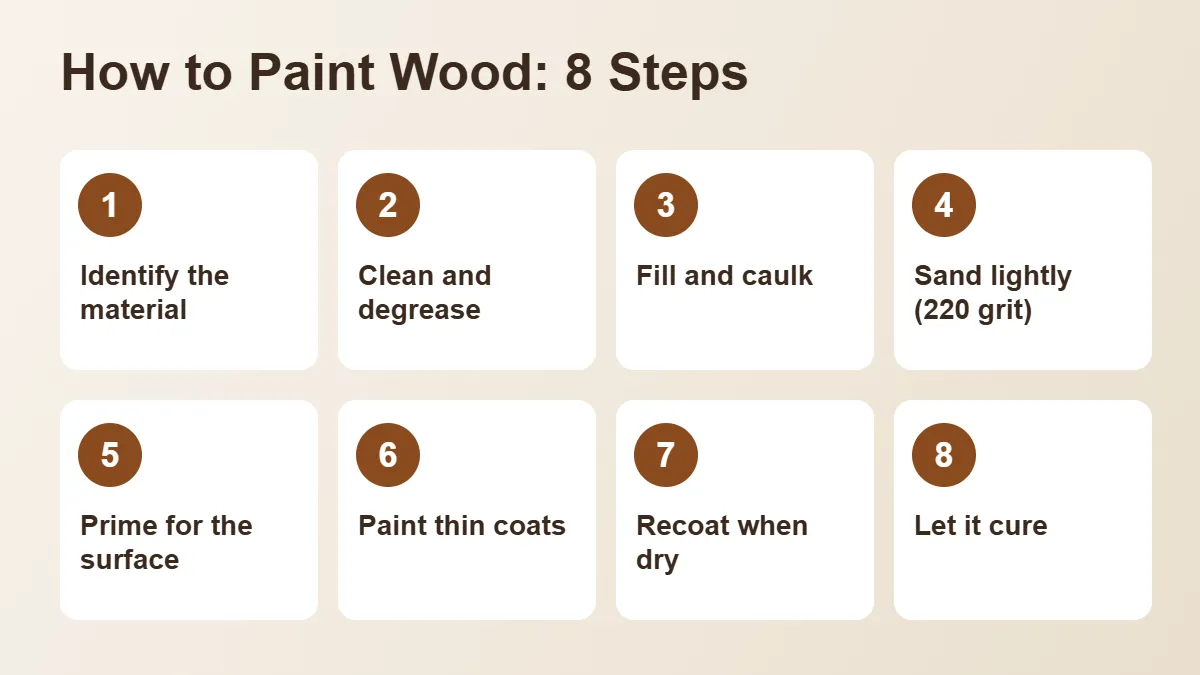
- Identify the material. Check an exposed edge. Veneer is a thin wood layer, so avoid sanding through it.
- Clean thoroughly. Degrease to remove polish, grime and cleaner residue.
- Repair. Fill holes and dents, and caulk seams. Spot prime areas you will fill.
- Sand lightly. Use 220 grit, then vacuum and wipe with a damp cloth. Dull any glossy surface so paint can grip.
- Prime. Benjamin Moore suggests different primers by surface: a bonding primer for laminate or veneer, a hardwood primer for hardwood, and an oil-based primer for tannin-rich wood such as cedar and redwood.
- Paint thin coats. Cut in edges with a brush, then roll or brush the rest, working with the grain.
- Recoat when fully dry. Drying time varies by product and humidity, so follow the can. Benjamin Moore Advance lists a 16 hour recoat time.
- Let it cure. Curing time is longer than drying time. Benjamin Moore advises waiting 24 hours before hanging decor or placing furniture, and hard enamels keep hardening longer. Treat light use as fine and heavy use as something to delay.
For outdoor wood, competitors add pressure washing, removing flaking paint down to solid wood, and applying a third coat on horizontal, high-wear surfaces. Wolman adds that new or sealed decks should weather for six months before painting.
Supplies, Topcoats and Decorative Finishes
Even the best paint for wood needs the right tools. You need degreaser, sandpaper or sanding sponges, primer, a quality brush or foam roller, drop cloths and painter’s tape. A clear topcoat such as polyurethane or polycrylic adds scratch resistance to chalk and milk paint. All-in-one and enamel paints usually do not need one, but check the label.
Decorative finishes include distressing, waxing and glazing. These are optional, and they suit chalk and milk paint more than hard enamel. When mixing paint, stir thoroughly and avoid thinning unless the manufacturer allows it.
What Do Other Decorators Think?
Professional opinions are mixed, and no decorator agrees on a single best paint for wood. UK commenters recommend different trade brands, and several dispute each other’s picks. One reviewer’s top water-based picks drew disagreement over whether Scuff X needs an adhesion primer. The lesson is to test a small area and follow the can instructions rather than rely on one painter’s view.
Final Thoughts
The best paint for wood is a waterborne alkyd enamel for interior trim and furniture, and exterior acrylic latex for outdoor wood. Prime properly, apply thin coats and respect cure times. Verify any spec the official pages leave unlisted before you buy.
FAQs
Is eggshell or satin better for wood?
Satin is better for most wood, because it is more durable and easier to wipe. Choose eggshell for low-traffic trim or furniture where a softer glow is wanted. UK decorators describe eggshell as about 20 percent sheen and satinwood as about 40 percent.
What is the toughest paint for wood?
Waterborne alkyd enamels are the toughest options verified here. Benjamin Moore says Advance cures to a hard, furniture-quality finish, and Sherwin Williams describes Emerald Urethane Trim Enamel as a hard, durable finish for frequently cleaned areas. Outdoors, latex holds gloss longest.
Can you paint directly on wood?
You can paint bare wood, but prime it first. BEHR says to always use primer on exterior projects, and Benjamin Moore recommends an oil-based primer on tannin-rich wood such as cedar and redwood. Glossy finished wood needs cleaning and a bonding primer.
Is there special paint for wood?
Yes, but no single paint fits every wood project. Waterborne alkyd enamels suit trim and furniture, exterior acrylic latex suits siding, and products like Wolman Outdoor Furniture Paint target outdoor furniture. All-in-one, chalk and milk paints suit decorative furniture.
What kind of paint is best for finishing wood?
For a painted finish, use a waterborne alkyd enamel in satin or semi-gloss. If you want the grain visible, paint will hide it, so use a clear finish such as polyurethane instead. Chalk and milk paint usually need a topcoat.
What is the downside of eggshell paint?
Eggshell is less scrubbable and sheds water less well than satin or semi-gloss, so it marks faster in high-touch areas. UK decorators also note its low sheen can look dull. It suits low-traffic wood best.
What sheen do professional painters use?
No official survey was found, so no percentage is claimed. A common approach is satin or semi-gloss on trim, doors and cabinets, and lower sheens on walls. Sherwin Williams recommends semi-gloss Emerald Urethane Trim Enamel for areas cleaned often.
What is the best paint finish for woodwork?
Satin or semi-gloss is the best paint finish for woodwork. Semi-gloss wipes cleanest, and satin hides flaws better. Gloss suits hard-wearing trim, but it shows dents and brush marks.
What is the best paint brand for wood?
No brand wins every job, so match the brand to the project. Benjamin Moore Advance suits interior trim, cabinets and furniture, with $88.99 listed for a satin gallon. Sherwin Williams Emerald Urethane Trim Enamel suits interior and exterior trim, and its price is not listed.
What paint do most professional painters use?
No verified survey exists, so no brand share is claimed. Sherwin Williams says latex is the longest-lasting exterior choice and alkyd suits exterior trim. UK decorators generally favor trade ranges over retail paints.