Blog Home Ideas TheHomeTrotters: 2026 Room-by-Room Guide

If you searched for blog home ideas TheHomeTrotters, you probably want practical ways to make your home look better and work better without a magazine budget. This guide covers room-by-room decorating, 2026 paint colors, organization, basic repairs and real renovation costs, with every figure tied to a named source.
It also answers a question most pages skip: what TheHomeTrotters actually is, and who is behind the name.
Quick answer: Blog home ideas TheHomeTrotters refers to practical, budget-aware home inspiration published under the TheHomeTrotters name, covering decorating, paint and color, organization, DIY and basic home repair. Several unconnected websites use the name, so treat it as a style of advice (function first, then style) rather than one official brand.
What Is Blog Home Ideas TheHomeTrotters?
Blog home ideas TheHomeTrotters is a search term people use to find home decor ideas, home improvement tips and interior design inspiration linked to the TheHomeTrotters name. The content focuses on everyday homes rather than showrooms: renters, first-time buyers and families working with a budget.
What Topics Do TheHomeTrotters Blog Home Ideas Cover?
Across the sites publishing blog home ideas TheHomeTrotters content, the same topics come up again and again:
- Decorating and home styling, room by room
- Paint colors and color schemes
- Small space design and storage solutions
- DIY home projects and budget-friendly home improvements
- Home maintenance and repair basics, often labeled TheHomeTrotters HomeRepairs
- Smart home technology and seasonal home decorating
This guide covers each one and adds sources where the original pages had none.
Why Do Homeowners Love TheHomeTrotters Blog Home Ideas?
The appeal is realism. Most of the ideas cost little, use what you already own, and work in a rental apartment or a starter home as well as in a large house.
That focus on practical home living is the part worth keeping. What the typical page leaves out is current data, safety guidance and any sourcing, which is what the rest of this guide adds.
Is TheHomeTrotters a Real Website? Who Is Behind the Name?
The name is real, but no single confirmed owner stands behind every site that uses it. A review of the main domains by Tycoonstory found that TheHomeTrotters.org names Trisha McNamara as its founder, while TheHomeTrotters.com publishes stories about different McNamara families, and the connection between the sites remains unverified.
Other sites also put the name in their domain or headlines to rank for blog home ideas TheHomeTrotters. That doesn’t make their advice bad. It does mean “TheHomeTrotters recommends” is not a credential on its own.
Who Is Trisha TheHomeTrotters?
Searches for Trisha TheHomeTrotters usually lead to Trisha McNamara, whom TheHomeTrotters.org describes as its founder. Beyond that self-description, we found no independent profile, interview or business record confirming her background, so treat credential claims about her on third-party sites with caution.
What About McNamara TheHomeTrotters?
McNamara TheHomeTrotters is confusing because the name points to more than one family. According to the same Tycoonstory review, TheHomeTrotters.com has published separate stories about Dan and Rachel McNamara and about Mike and Beth McNamara, largely about family travel and online business rather than decorating.
What Is CoolIdeas TheHomeTrotters Com?
“Coolideas thehometrotters com” is a search phrase for creative and DIY ideas tied to the name. We could not confirm an active official page at that address. Most results for the phrase are articles on unrelated sites that use it as a keyword.
How Do You Contact TheHomeTrotters .Com and Avoid Look-Alike Sites?
Use the contact page on the exact domain you mean (TheHomeTrotters.com or TheHomeTrotters.org), not a form on a site with a similar name. Many pages ranking for blog home ideas TheHomeTrotters are independent sites, so run a quick check before trusting a claim or sharing personal details:
- Match the domain exactly. Watch for extra words such as “blog,” “ideas” or “repairs” added to the name.
- Look for a named author with a real bio, not just “admin.”
- Read the About page. A contact email on an unrelated company’s domain is a red flag.
- Check for sources. Useful advice links to where its facts come from.
Why Do Most Home Ideas Fail in Real Homes?
Most home ideas fail because they are copied from a photo instead of solving a problem in your actual room. A styled shot has different light, dimensions and furniture than your space, and nobody in it has to find their keys in the morning.
The blog home ideas TheHomeTrotters readers get the most from all start with the room as it really is.
Why Does a Room Still Feel “Off” After You Decorate?
It’s usually one of four things:
- No focal point. The eye has nowhere to land, so the room feels scattered.
- Furniture pushed against every wall. Pulling seating inward into a conversation group can fix a room that feels both empty and cluttered.
- One overhead light. Flat light makes even good decor look tired.
- Scale problems. A rug that’s too small, tiny art or an oversized sectional throws off the whole room.
Each of these costs little or nothing to fix, and the fixes are covered below.
What Mistakes Should You Avoid When Refreshing Your Home?
These are the mistakes that come up most often in reader questions about blog home ideas TheHomeTrotters:
- Buying decor before measuring the room
- Choosing paint from a small chip under store lighting
- Chasing several trends at once
- Filling every shelf and wall
- Starting three rooms at the same time
- Decorating over leaks, damp spots or other repairs
Where Should You Start? A 4-Step Plan to Turn Inspiration Into Action
Start with one room, the one that frustrates you most each day, and work through these steps in order. This plan is how blog home ideas TheHomeTrotters style inspiration turns into a finished room instead of a saved folder.
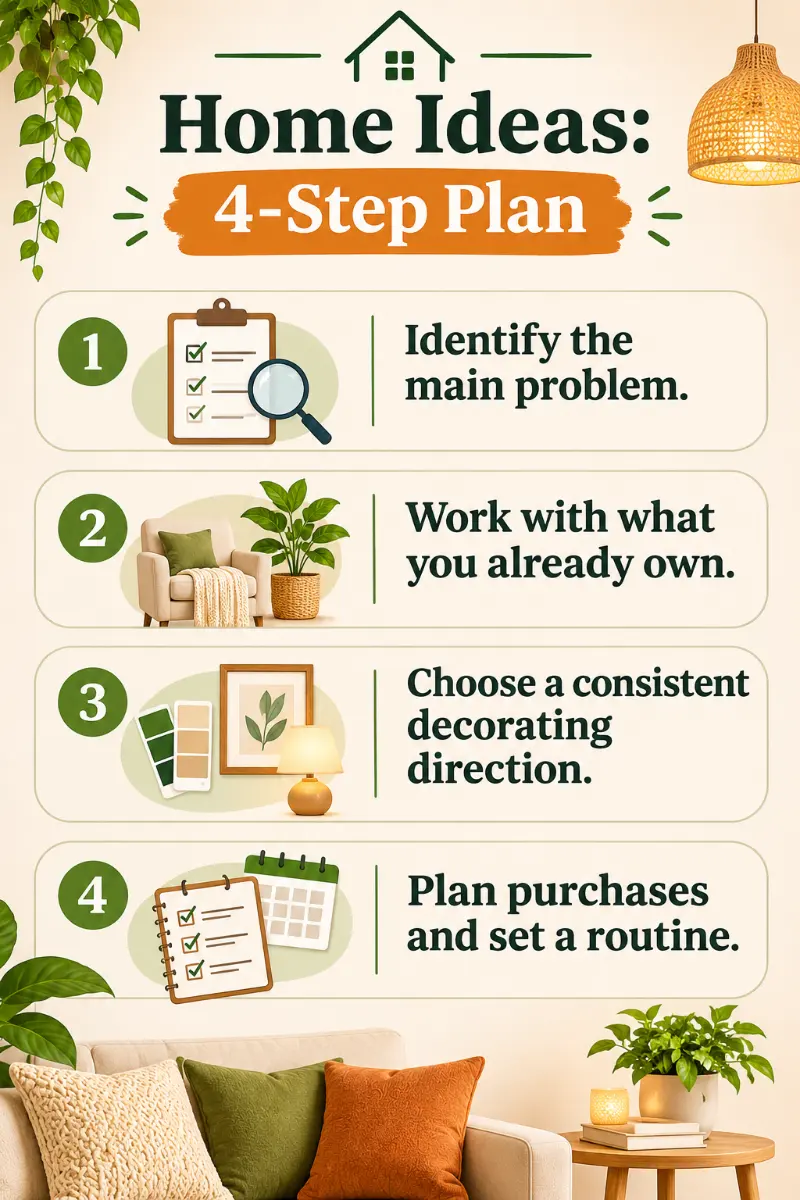
- Identify the main problem. Write down the three things that bother you most in the room. Pick one to fix first.
- Work with what you already own. Move furniture, swap lamps between rooms and remove anything that isn’t used. Decluttering often does more than buying.
- Choose a consistent decorating direction. Repeat a few elements, such as a color family, a wood tone or a metal finish, so rooms feel connected without matching.
- Plan purchases and set a routine. Set a home improvement budget, buy the highest-impact item first and finish one room before starting the next. Keep before photos and measurements on your phone.
Which Home Decor Styles Suit TheHomeTrotters Approach?
Blog home ideas TheHomeTrotters advice works with almost any style, as long as you pick one or two and stay consistent. The table below compares the styles that come up most.
| Style | Palette | Key materials | Works well for | Paint direction |
|---|---|---|---|---|
| Modern minimalism | Whites, warm grays, black accents | Smooth surfaces, metal, glass | Busy households that want calm | Soft whites or tinted neutrals |
| Scandinavian and Japandi | Light neutrals, muted greens | Light wood, linen, wool, ceramics | Bedrooms, home offices | Warm whites, pale greens |
| Modern farmhouse | Creams, earthy neutrals, black | Reclaimed wood, shiplap, iron | Kitchens, family rooms | Warm white walls with dark trim or doors |
| Contemporary | Neutral base plus one bold color | Mixed materials, statement lighting | Living rooms, open plans | Neutral walls and one saturated accent |
| Travel-inspired | Terracotta, blue, olive | Rattan, textiles, ceramics, souvenirs | Living rooms, reading nooks | Earthy tones such as olive or clay |
Treat these as starting points rather than rules.
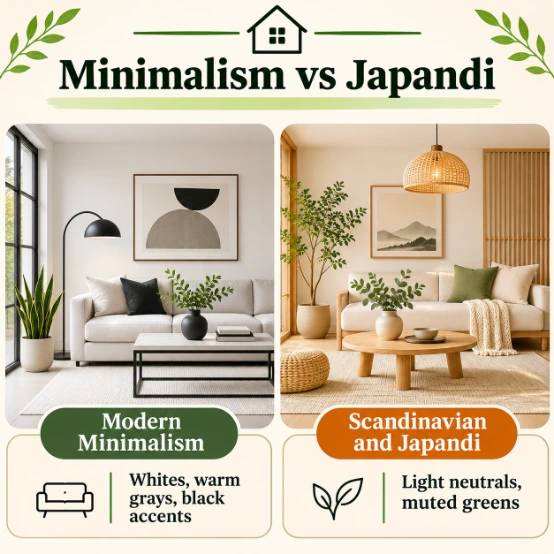
Modern Minimalism
Minimalist home design means fewer, better things. Keep most surfaces clear, choose furniture with simple lines and give every object a job.
It doesn’t mean empty. A wool throw or a wood bowl stops a minimal room from feeling cold.
Scandinavian and Japandi Design
Scandinavian interior design pairs light wood, pale walls and soft textiles with as much natural lighting as possible. Japandi blends that with Japanese restraint: low furniture, natural materials and some deliberately empty space.
Modern Farmhouse Style
Farmhouse interior design uses warm neutrals, wood and vintage pieces. To keep it modern, limit the signs and “rustic” accessories and let one material, such as a wood dining table or open shelving, carry the look.
Contemporary Living
Contemporary interior design follows what’s current: clean architecture, mixed materials and statement lighting. Because it changes over time, put the trendiest choices into things that are easy to swap, like pillows, lamps and paint.
Travel-Inspired Decor: Mediterranean, Moroccan and Global Accents
The “home trotter” idea fits travel-inspired decor: ceramics, textiles and art from places you’ve been. Mediterranean looks lean on whitewashed walls, terracotta and blue. Moroccan looks add pattern, brass lanterns and richer color.
How Do You Mix Styles Without Making a Room Feel Cluttered?
Use one main style and one accent style at most. Repeat two or three colors around the room, keep a neutral base and add pieces gradually. When a shelf starts to look like a gift shop, stop adding.
How Do You Choose Paint Colors That Work in Every Room?
Decide on the mood first, then test two or three samples on your own walls in your own light before buying gallons. Paint is the cheapest big change on any list of blog home ideas TheHomeTrotters readers collect, and interior paint colors shift a lot between morning and evening and between north-facing and south-facing rooms.
If you want tested examples, our color guides cover soft neutrals such as Neutral Ground SW 7568 and Edgecomb Gray HC-173, plus a deep, moody option in Vintage Vogue Benjamin Moore 462.
What Are the 2026 Paint Colors of the Year?
Most major brands chose earthy, nature-inspired colors for 2026, with green in the lead. Sherwin-Williams and HGTV Home by Sherwin-Williams announced Celery on September 15, 2026, describing it as a “tinted neutral”. Benjamin Moore chose Webster Green from its Historical Color Collection to anchor an eight-color palette.
| Brand | 2026 Color of the Year | How the brand or trade press describes it | Easy places to try it |
|---|---|---|---|
| Sherwin-Williams and HGTV Home by Sherwin-Williams | Celery (SW 6421) | Pale yellow-green “tinted neutral” | Kitchens, bathrooms, bedrooms |
| Benjamin Moore | Webster Green (HC-130) | Rich, classic deep green | Dining rooms, libraries, cabinetry |
| Behr | Grounded (T27-01) | Olive green with brown undertones | Living rooms, accent walls |
| Pittsburgh Paints | Artifact (PPG10-16) | Warm smoky blue | Bedrooms, home offices |
| Dutch Boy | Deep Rooted | Rich, earthy orange | Entryways, accent walls |
| Valspar | Cottage Door | A soothing, familiar shade | Test first, as with any trend color |
The “easy places to try it” column reflects our suggestions, not the brands’ instructions.
Should you follow Color of the Year picks?
- Pros: a fresh direction, plenty of coordinating decor in stores and easy sampling.
- Cons: trend colors can date faster, and a color chosen for a national campaign may not suit your light or furniture.
A sensible middle path is to try the trend color on one wall, a bathroom vanity or a single piece of furniture.
How Do You Test Paint Colors Before You Commit?
Testing is the step most blog home ideas TheHomeTrotters pages skip, and it prevents most paint regret.
- Narrow your choice to two or three colors from the same family.
- Use large samples, such as peel-and-stick sheets or a painted poster board, rather than chips.
- Place them on at least two walls, one near a window and one in shadow.
- Look at them in morning, afternoon and evening light, and under your own bulbs.
- Hold them next to your flooring, sofa and trim.
- Test in the sheen you plan to use, because sheen changes how a color reads.
Should You Paint Before or After Buying Furniture?
If you’re moving into an empty home, paint first. Empty rooms are faster and cheaper to paint.
If you already own a large piece you’re keeping, like a sofa or rug, test colors against it. It’s far easier to match paint to fabric than fabric to paint.
Which Paint Sheen Should You Use in Each Room?
Sheen is how shiny the dried paint looks. Higher sheens wipe clean more easily but show wall flaws more.
Sherwin-Williams recommends satin or semi-gloss for bathrooms because they hold up to moisture, and flat or eggshell where you want to hide imperfections. This Old House summarizes the usual pattern: flat for ceilings, matte or eggshell for walls, and satin or semi-gloss for trim.
| Room | Walls | Trim and doors | Ceiling |
|---|---|---|---|
| Living and dining room | Eggshell or matte | Semi-gloss | Flat |
| Bedroom | Matte or eggshell | Semi-gloss | Flat |
| Kitchen | Satin | Semi-gloss | Flat |
| Bathroom | Satin or semi-gloss | Semi-gloss | Flat |
| Kids’ rooms and hallways | Satin | Semi-gloss | Flat |
Sheen names vary from brand to brand, so one company’s eggshell can look close to another’s satin. Check the sample in person.
Which Paint Colors Make a Small Room Look Bigger?
Lighter colors reflect more light, which usually makes a small room feel more open. Many paint cards list an LRV (light reflectance value) on a 0 to 100 scale, and a higher number means the color reflects more light.
Painting walls and trim the same light color also softens the room’s edges. Dark colors can work in small rooms too, but they make the space feel cozier rather than larger.
Is It Safe to Paint a Home Built Before 1978?
It can be, but check for lead first. The federal government banned lead-based paint for homes in 1978, and the EPA estimates that about three-quarters of US homes built before then still contain some. Sanding, scraping or demolition can create dangerous lead dust.
- Contractors paid to disturb paint in pre-1978 homes must be certified in lead-safe work practices under EPA’s Renovation, Repair and Painting (RRP) Rule.
- The rule doesn’t apply to homeowners working on their own homes, but DIY projects can still create dangerous lead dust.
- Painting over intact paint is lower risk than prep work that disturbs it. If you’re unsure, test first or hire an EPA-certified firm.
Room-by-Room Home Decor Ideas TheHomeTrotters Readers Can Use
Every room has a different job, so each one needs different priorities. The room-by-room blog home ideas TheHomeTrotters readers ask about most are below, each starting with function and then adding style.
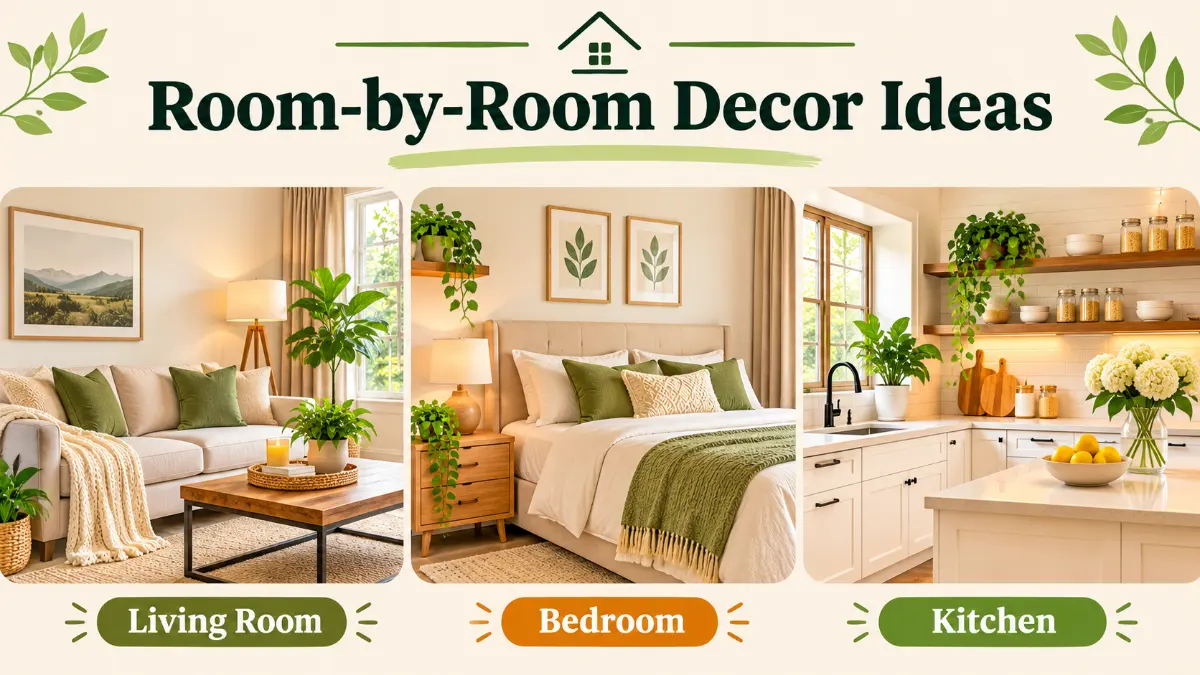
Living Room: How Do You Make It Welcoming?
The living room is where most blog home ideas TheHomeTrotters readers start, so arrange the seating for conversation first. Group the sofa and chairs facing each other or a focal point, and keep clear walking paths around them.
- Size the rug generously. Designers commonly suggest a rug large enough for at least the front legs of the main seating, and 8 by 10 feet is the most common living room size.
- Choose one focal point, such as a fireplace, a large piece of art, a window or a bookcase.
- Add layered lighting so the room doesn’t rely on one ceiling fixture.
- Edit your home accessories. A few meaningful pieces look better than many small ones.
Houzz reports that median living room renovation spend reached $5,000 in 2025, but most of the changes above cost far less.
Bedroom: How Do You Make It Calm and Organized?
In bedroom-focused blog home ideas TheHomeTrotters guides, decorating starts with the bed, since it’s the largest visual element. Soft or neutral bedding, two matching lamps and a clear nightstand do more than extra decor.
- Hang curtains high and wide. HGTV suggests hanging drapes at least 12 inches above the window frame, or all the way to the ceiling, and extending the rod 3 to 6 inches past each side.
- Use under-bed bins for off-season clothes and spare linens.
- Keep work, laundry and exercise gear out of sight where you can.
Kitchen: Which Updates Add Function and Style?
Good kitchen design starts with workflow. Store everyday items closest to where you use them, and clear the counters of anything you don’t use daily.
Kitchens were the most popular room to renovate in Houzz’s latest study, with median spend of $24,000 in 2025. Smaller updates stretch much further:
- New cabinet hardware
- Under-cabinet task lighting
- Drawer dividers and pull-out organizers
- A fresh wall color, or painted cabinets with proper prep
Open shelving, pros and cons
- Pros: shows off favorite dishes, keeps daily items within reach and makes a small kitchen feel more open.
- Cons: collects dust and grease, needs constant editing and holds less than closed cabinets.
Bathroom: How Do You Upgrade Without a Full Remodel?
The bathroom blog home ideas TheHomeTrotters readers can do without a contractor include a framed mirror, matching towels and accessories, fresh caulk and organized storage under the sink. Use a moisture-ready sheen on the walls and run the exhaust fan during and after showers.
Fix leaks and damp spots before decorating, because paint won’t solve a moisture problem. For context, Houzz put median 2025 spend at $15,000 for primary bathrooms and $7,000 for guest bathrooms.
Home Office: How Do You Set Up a Space That Works?
Home office design is a newer topic in blog home ideas TheHomeTrotters content, and it comes down to light, comfort and separation. Place the desk so window light falls to the side rather than directly behind your screen, which cuts glare, and add a task lamp for evenings.
Define the work zone with a rug, a bookcase or a different wall color, even if it’s just a corner. Houzz reports median home office spend of $2,000 in 2025.
Dining Room: What Makes It Feel Elegant and Usable?
The best dining room ideas start with the table. Leave enough space to pull chairs out comfortably, choose a low centerpiece so people can see each other, and center the pendant or chandelier over the table rather than the room.
One wall with art or a mirror is usually enough to finish the space.
Entryway: How Do You Create a Practical Drop Zone?
A drop zone is one of the simplest blog home ideas TheHomeTrotters readers can copy. Give everything that comes through the door a place: hooks for bags and coats, a tray for keys and a bench or rack for shoes. In a narrow hallway, a wall shelf with hooks underneath does the same job in less space.
How Do Lighting, Wall Decor and Natural Elements Finish a Room?
These are the details that make a room feel finished. In most blog home ideas TheHomeTrotters readers try, lighting design makes the biggest difference, followed by wall decor and texture.
How Do You Layer Lighting for a Warm Atmosphere?
Layered lighting combines three types of light:
- Ambient: general light from ceiling fixtures and natural lighting.
- Task: focused light for reading, cooking or working.
- Accent: table lamps, picture lights or LED strips that add warmth and depth.
Warm-white bulbs suit living rooms and bedrooms, while brighter light helps in kitchens and work areas. Dimmers let one room do both.
What Wall Decor Ideas Work Best, From Gallery Walls to Travel Art?
- One large piece creates a calm, focused look.
- A gallery wall works when the photos and prints share a color or frame finish.
- Mirrors bounce light into darker rooms.
- Travel art and photography from places you’ve visited make the room personal.
Scale matters most. Art above a sofa should look connected to it, not like a small frame floating on a big wall.
How Do You Display Souvenirs and Personal Pieces With Purpose?
Group items into small vignettes instead of scattering them around the room. Start with one taller anchor piece, add a few supporting objects at different heights and include something textured, like a basket or ceramic bowl.
Rotate pieces with the seasons so the display stays fresh.
How Do You Add Texture and Natural Elements?
Decorative textures keep neutral rooms from feeling flat. Wool, linen, jute, rattan, wood, stone and ceramics all add depth, and mixing two or three in a room usually looks more relaxed than a single matched set.
Plants add color and life. They just don’t do everything people expect of them.
How Do You Improve Indoor Air Quality? (And Do Houseplants Help?)
Houseplants are great decor, but they won’t measurably clean the air in your home. The idea traces back to a 1989 NASA study done in small sealed chambers, and Iowa State University Extension points to EPA’s position that there is no evidence a reasonable number of houseplants removes significant pollutants in homes.
What actually helps indoor air quality:
- Reduce the source. Choose low-VOC paints and finishes.
- Ventilate. When painting, the CPSC recommends window-mounted box fans to exhaust vapors, secured so they can’t fall. Most home heating and cooling systems recirculate air rather than ventilate, so opening windows matters.
- Filter. Change your HVAC filter on schedule (see the maintenance section below).
TheHomeTrotters Home Decor Ideas for Small Spaces
Small space design is mostly space optimization: every piece has to earn its spot, and some floor should stay visible. Many blog home ideas TheHomeTrotters pages are written with apartments and starter homes in mind, which is why this section matters.
Use Furniture That Supports More Than One Activity
Multifunctional furniture appears in nearly every list of small-space blog home ideas TheHomeTrotters readers save, because it frees up floor space. Good examples include a storage ottoman, an extendable dining table, a bed with drawers and a console that doubles as a desk.
Measure before you buy. A multifunctional piece that blocks a walkway defeats the purpose.
Make Better Use of Vertical Space
Build up instead of out with floating shelves, tall bookcases, wall hooks and over-door organizers. Anchor tall furniture to the wall, and use wall anchors rated for your wall type and the weight you’re hanging.
Why Leaving Empty Space Makes a Room Feel Bigger
Visual breathing room matters as much as storage. Leave a few shelves partly empty and keep at least one wall simple.
A mirror opposite or beside a window also helps by bouncing natural light deeper into the room.
Home Organization Tips That Make Every Room Easier
Home organization works best when you declutter first and buy storage solutions second. Otherwise you end up neatly storing things you don’t need, a step many blog home ideas TheHomeTrotters lists skip.
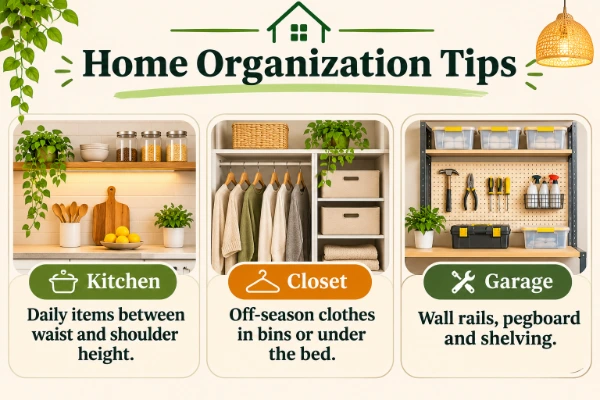
Kitchen Organization
- Keep daily items between waist and shoulder height.
- Use drawer dividers for utensils and a tiered riser for spices.
- Group pantry items in clear, labeled bins.
- Leave only daily-use appliances on the counter.
Closet Organization
- Move off-season clothing to bins or under-bed storage.
- Switch to matching slim hangers to fit more and look tidier.
- Add a second rod for short items like shirts.
- Give shoes a rack or shelf so the floor stays clear.
Garage Organization
- Get items off the floor with wall rails, pegboard and shelving (a garage favorite in blog home ideas TheHomeTrotters guides).
- Use overhead racks for seasonal items you rarely need.
- Store paint, solvents and chemicals up high, out of children’s reach.
How Do You Keep an Organized Home Easy to Clean?
Household cleaning goes faster when surfaces stay clear and finishes are wipeable. Choose satin paint in hallways and kids’ rooms, keep a small cleaning kit on each floor and do a 10-minute evening reset: wipe the counters and put things back where they belong.
How Can You Improve Your Home Without Overspending?
Set a home improvement budget before you shop, and put the money toward what you use every day. This is where blog home ideas TheHomeTrotters pages usually guess at prices, so the figures below come from published research instead.
How Much Does a Home Renovation Cost in 2026?
The 2026 U.S. Houzz & Home Study, which drew on 20,358 Houzz users, gives a realistic picture of home renovation and home remodeling spending.
| Category | Median spend |
|---|---|
| All renovation projects, 2025 | $20,000 |
| Planned renovation spend, 2026 | $15,000 |
| Kitchen, 2025 | $24,000 |
| Primary bathroom, 2025 | $15,000 |
| Guest bathroom, 2025 | $7,000 |
| Living room, 2025 | $5,000 |
| Home office, 2025 | $2,000 |
A median means half of renovating homeowners spent more and half spent less. Houzz notes that the figures are not adjusted for inflation, and real costs vary widely by region and project size.
Budget-Friendly Home Improvement Ideas by Price Range
| Tier | Example projects | Best for |
|---|---|---|
| Free | Rearranging furniture, decluttering, moving art and lamps between rooms | Any room that feels “off” |
| Low cost | Paint, cabinet hardware, pillow covers, a new lamp, under-bed storage | Quick, visible change |
| Mid range | Area rug, curtains and rods, light fixtures, a closet system | Finishing a room |
| Splurge | Sofa, mattress, flooring, partial kitchen or bath remodel | Items you use daily for years |
Which Home Improvements Add the Most Resale Value?
This is a question blog home ideas TheHomeTrotters pages rarely answer with data. Exterior projects usually return the most at resale. In Zonda’s 2025 Cost vs. Value report, eight of the top ten projects were exterior replacements, and projects such as stone veneer, siding, new doors and decking dominated the top of the list.
That doesn’t mean you should skip interior work. Paint, lighting and a better layout make the home better to live in now, even if they don’t show up on an appraisal.
How Do You Make Your Home Look Expensive on a Budget?
It’s one of the most-asked questions around blog home ideas TheHomeTrotters, and the answer is mostly restraint. Rooms look expensive when they look intentional:
- Declutter surfaces before adding anything new.
- Repeat a small color palette so rooms feel planned.
- Swap dated hardware and light fixtures.
- Hang curtains high and wide, as described in the bedroom section.
- Size up art and rugs, because undersized pieces read as an afterthought.
- Spend on what you touch daily, like a sofa or mattress, and save on accessories.
DIY Projects Worth Trying, and When to Call a Pro
DIY home projects add personality and save money when they match your skill level. The safest blog home ideas TheHomeTrotters readers can tackle are cosmetic, while anything involving gas, wiring or structure belongs with a licensed pro.
| Project | DIY-friendly? | Skill level | When to call a pro |
|---|---|---|---|
| Painting walls in a post-1978 home | Yes | Beginner | Very high ceilings or major drywall repair |
| Painting in a pre-1978 home | With caution | Intermediate | Peeling paint or any sanding; use an EPA-certified firm |
| Swapping cabinet hardware | Yes | Beginner | Rarely |
| Gallery wall or peel-and-stick wallpaper | Yes | Beginner | Rarely |
| Refinishing furniture | Yes | Beginner to intermediate | Antiques or valuable pieces |
| Replacing a faucet | Often | Intermediate | Corroded shutoff valves or leaks you can’t trace |
| Replacing a light fixture | Sometimes | Intermediate | New wiring, or whenever you’re unsure |
| Gas lines, structural changes, electrical panels | No | Professional | Always |
Which DIY Home Decor Projects Are Best for Beginners?
Good first projects from any blog home ideas TheHomeTrotters list:
- Painting a room or an accent wall
- Updating furniture with paint and new knobs
- Building a gallery wall
- Installing peel-and-stick wallpaper or backsplash, which suits renters
- Moving curtain rods higher and wider
When Should You Hire a Licensed Professional?
Call a pro for gas lines, structural changes, new electrical circuits, roof work and any project that disturbs paint in a pre-1978 home if you aren’t trained in lead-safe practices. Many cities require permits for electrical and plumbing work, so check with your local building department before starting.
Understanding TheHomeTrotters HomeRepairs: Maintenance Before Makeovers
TheHomeTrotters HomeRepairs searches are about keeping a house sound before making it pretty. Of all the blog home ideas TheHomeTrotters content covers, a simple home maintenance routine saves the most money, because it prevents the kind of home repair that wipes out a decorating budget.
| System | What to check | Suggested timing |
|---|---|---|
| HVAC | Air filter | Check monthly, change at least every 3 months (ENERGY STAR) |
| Smoke alarms | Test button, battery, manufacture date | Test monthly, replace the alarm every 10 years (USFA) |
| Plumbing | Under sinks, around toilets and the water heater | Each season |
| Roof and gutters | Missing shingles, clogged gutters | Spring, fall and after major storms |
| Electrical | GFCI outlets, warm or buzzing outlets | Periodically; call an electrician right away for warm outlets |
The HVAC and smoke alarm schedules come from the agencies named. The other timings are practical suggestions.
Plumbing
Learn where your main water shutoff valve is before you need it. Check under sinks for drips or stains, listen for a toilet that keeps running and watch for an unexplained jump in your water bill, which can point to a hidden leak.
When a Plumbing Problem Needs a Pro
Call a licensed plumber for leaks inside walls or ceilings, sewer smells, low pressure throughout the house or anything involving a water heater’s gas line or venting.
Electrical
Test GFCI outlets (the ones with Test and Reset buttons, usually near water) with the Test button. Warm outlets, buzzing switches, flickering lights or breakers that trip repeatedly call for a licensed electrician, not a DIY fix.
Smoke alarms belong in this routine too. The U.S. Fire Administration recommends testing alarms monthly, replacing replaceable batteries at least once a year and replacing the entire alarm every 10 years. Install them in every bedroom, outside each sleeping area and on every level, including the basement.
Roofing
Inspect the roof from the ground with binoculars instead of climbing up. Look for missing or curled shingles and damaged flashing, and keep gutters clear so water drains away from the house.
A water stain on a ceiling usually means a roof or plumbing leak above it. Find the cause before you repaint.
HVAC Systems
ENERGY STAR recommends checking your HVAC air filter monthly and changing it as needed, at least every three months. A clogged filter makes the system work harder to heat and cool your home.
Book professional tune-ups ahead of the heating and cooling seasons, and keep the outdoor unit clear of leaves and debris.
Smart Home Technology and Sustainable Home Design
Smart home technology is worth buying when it saves energy or improves safety. Devices that only add another app rarely earn their place, and the blog home ideas TheHomeTrotters readers get the most from here are the practical ones.
Which Smart Home and Security Upgrades Are Worth It?
For readers who search “tech thehometrotters .com,” these upgrades have the clearest payoff:
- Smart thermostat. EPA’s ENERGY STAR program says the average user of a certified smart thermostat saves more than 8% of heating and cooling energy, about $50 a year. Look for the ENERGY STAR label.
- Video doorbell and smart lock. You can see who’s at the door and lock up from your phone.
- Smart lighting and plugs. Basic home automation turns lamps on when you get home and off when you leave.
- Interconnected smoke and CO alarms. When one sounds, they all sound.
For home safety and security, protect every connected device with a strong, unique password, turn on two-factor sign-in where it’s offered and keep the firmware updated.
How Can You Make Your Home More Energy-Efficient and Sustainable?
Energy-efficient home upgrades often pay off quietly:
- Switch remaining bulbs to LEDs.
- Seal drafts around doors and windows with weatherstripping.
- Look for ENERGY STAR labels on appliances and EPA WaterSense labels on faucets, showerheads and toilets.
- Choose low-VOC paint and durable materials you won’t need to replace soon.
- Refinish or reupholster furniture instead of replacing it.
Sustainable home design isn’t only about products. Buying less and keeping things longer is the most sustainable choice most households can make.
Outdoor Living Inspiration: Patio, Porch and Curb Appeal Ideas
Outdoor living spaces work like any other room: define a zone, add comfortable seating and layer the light. These blog home ideas TheHomeTrotters readers can apply to a porch, a patio or a small balcony.
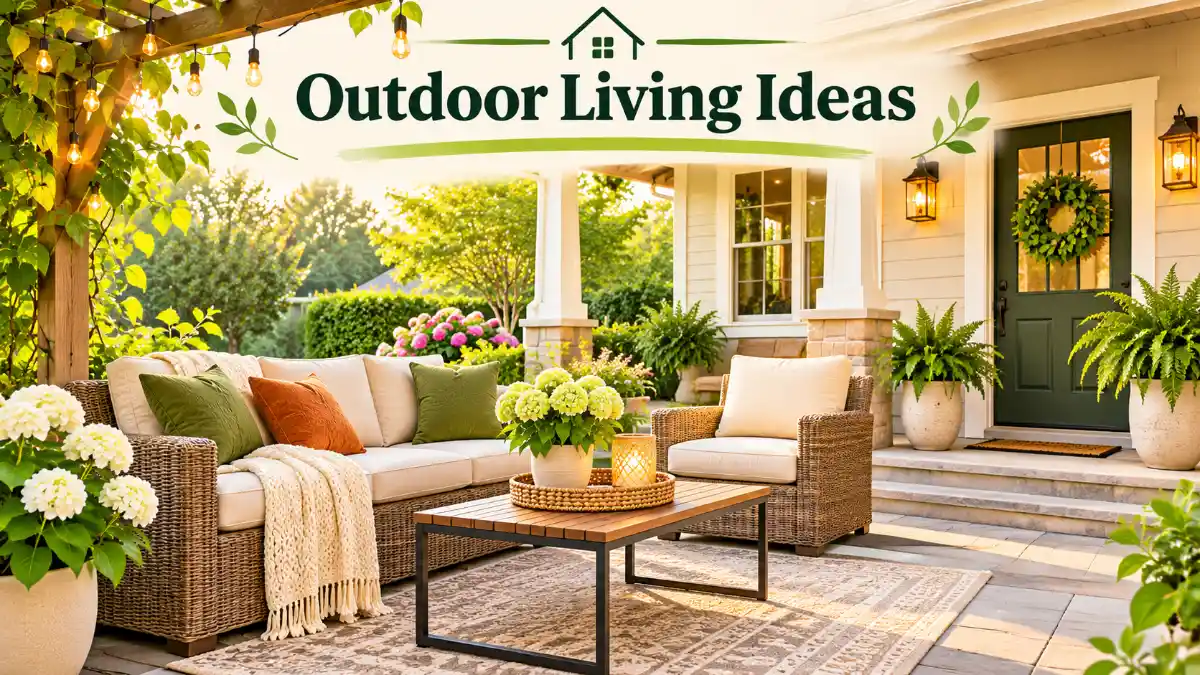
- An outdoor rug and two chairs turn a small porch into a sitting area.
- String lights or solar path lights extend evening use and make steps safer.
- Planters in one color family look more planned than a mix of pots.
- A painted front door and new house numbers update the entry at low cost.
If you’re thinking about resale, exterior replacements such as garage doors and steel entry doors have ranked at the top of Zonda’s Cost vs. Value reports in recent years.
Seasonal Decorating Ideas for Every Time of Year
Seasonal home decorating works best as a swap, not a redo. Keep the room’s base the same and rotate textiles and a few accessories, the approach most blog home ideas TheHomeTrotters guides favor for good reason.
| Season | Textiles | Colors | Easy swaps |
|---|---|---|---|
| Spring | Cotton, light linen | Soft greens, pastels | Fresh flowers, lighter throws |
| Summer | Linen, cotton | White, blue, natural tones | Sheer curtains, outdoor dining setup |
| Fall | Wool, knit, velvet | Rust, olive, warm brown | Warmer throws, candles, pumpkins |
| Winter | Faux fur, heavy knits | Deep green, cream, red accents | Extra lamps, layered bedding, greenery |
Spring
Spring is when many blog home ideas TheHomeTrotters readers start a refresh. Pack away winter layers, wash or swap curtains and bring in fresh flowers or branches. It’s also the natural time for a whole-house declutter.
Summer
Lighten the room with sheer curtains, cotton bedding and fewer accessories. Set up the patio or porch for evening use.
Fall
Fall blog home ideas TheHomeTrotters readers love are mostly about warmth: wool throws, warmer lamp light and earthy colors. Fall is also an easy season to test the 2026 greens on a pillow or throw before committing to paint.
Winter
Layer textiles and add lamps for the shorter days. Keep holiday decor to a few focused spots, like the entry and mantel, so the house doesn’t feel crowded.
Tips for Creating Your Dream Home
These habits tie the blog home ideas TheHomeTrotters approach together:
- Finish one room before starting the next.
- Buy fewer, better pieces for the things you use every day.
- Let natural light lead: keep windows clear and use light-filtering treatments.
- Repeat a small color palette from room to room.
- Mix old and new so the home feels collected rather than bought in one weekend.
- Keep a home file with paint colors, sheens, measurements and receipts.
- Fix leaks and safety issues before cosmetic upgrades.
Conclusion: Start With One Room and One Color
The most useful blog home ideas TheHomeTrotters readers can act on aren’t the most expensive ones. They start with how a room works, then add color, light and texture with a plan.
Pick the room that frustrates you most, order two paint samples and test them on your own walls this week.
Frequently Asked Questions About Blog Home Ideas TheHomeTrotters
Are the home decor ideas TheHomeTrotters suitable for beginners and renters?
Yes. Most blog home ideas TheHomeTrotters pages focus on rearranging furniture, layering lighting, swapping textiles and using peel-and-stick products, which need no special skills. Renters should check their lease before painting or drilling.
Does TheHomeTrotters HomeRepairs include maintenance guides?
Sites using that name publish general maintenance tips. For schedules you can rely on, follow official guidance, such as ENERGY STAR for HVAC filters and the U.S. Fire Administration for smoke alarms.
Is TheHomeTrotters free to read?
The blog home ideas TheHomeTrotters articles we reviewed were free to read without an account or subscription.
What are the easiest home improvements to start with?
The easiest blog home ideas TheHomeTrotters readers can start with are decluttering, rearranging furniture, adding a lamp, painting one room and replacing cabinet hardware. All are low cost and can be finished in a day or a weekend.
Should I follow the latest home decor trends?
Use trends where they’re easy to change, like pillows, a paint color or a lamp. Keep long-lasting, expensive pieces such as sofas and cabinets more timeless.
Are expensive home decor items worth the money?
Usually only for items you use every day, like a mattress, sofa or dining chairs. Decorative accessories are where saving makes the most sense.
How do I make a living room feel cozy without clutter?
Add texture with a wool throw or rug, use warm lamp light and display a few meaningful objects instead of many small ones. Coziness comes from softness and light more than from quantity.
What is the best way to use home decor inspiration from blogs?
Whether the idea comes from blog home ideas TheHomeTrotters pages or any other site, take the principle, not the exact look. When a photo catches your eye, note what you like about it (the color, the light, the layout) and apply that to your own space, budget and light.