
Decoradhouse Renovation Tips from Decoratoradvice: A Practical Home Guide

The core of decoradhouse renovation tips from decoratoradvice is a fixed order: inspect the home, define the scope, set a budget with a reserve, fix structural and safety problems, check permits, hire carefully, then finish surfaces, lighting and decor. Repairs come before decoration because paint and new fixtures cannot hide a leak, a wiring fault or a failing roof. This guide covers each step, room by room, with the checks that protect your budget and safety.
It is written for US homeowners planning a first or second renovation, whether the project is one room or a whole house, and it works for tight budgets and larger ones alike.
Quick steps:
- Inspect the house and list every problem.
- Write the scope and a budget with a 10% to 20% reserve.
- Fix structural, leak and safety issues first.
- Check permits and compare written contractor estimates.
- Follow the renovation order and inspect the work before final payment.
What Should We Consider Before Renovating?
Decoradhouse renovation tips from decoratoradvice is the name online guides use for a practical, function-first approach to home improvement. It is a framework, not a licensed standard. The advice here is checked against the U.S. Department of Energy, the U.S. EPA, ENERGY STAR, the Federal Trade Commission and HUD.
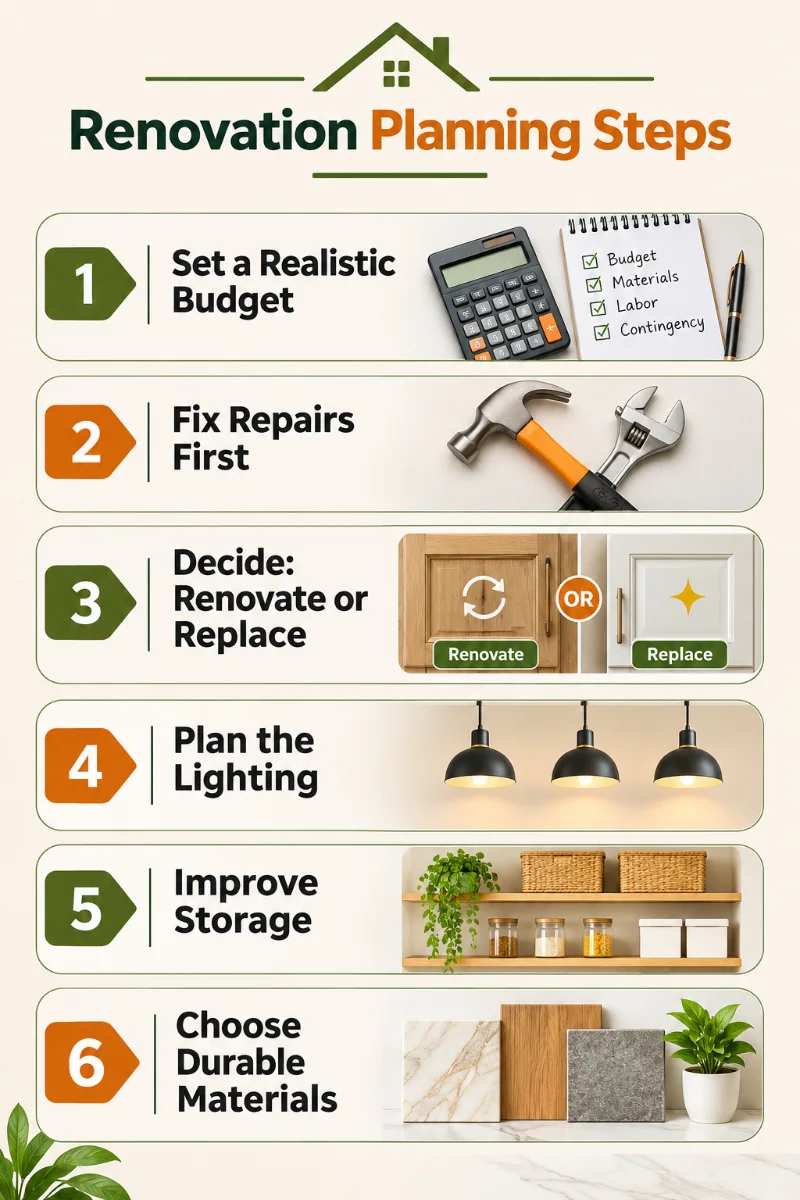
Before spending anything, settle four things: For more decor ideas once the work is done, see our blog home ideas guide.
- How you actually live. Watch your routines for a couple of weeks and note where you lose space, light or time. A renovation should fix those daily frustrations, not follow how you think you should live.
- What finished means. Write a short must-have list so the scope does not keep growing. Without a clear finish line, extra ideas quietly push the budget up.
- The home’s condition. Start with a home inspection and work with the bones of the house, including light paths, structural walls and door and window positions.
- The real problem. Identify what is wrong before choosing a fix. A dark kitchen may need lighting, not a new layout.
- Timing and people. Decide when you need the work finished and who will do it, because both affect cost.
Create a Realistic Renovation Budget
Budget beyond materials. A renovation budget usually covers these areas:
| Budget area | What it covers |
|---|---|
| Labor | Contractors and trades |
| Materials | Surfaces, finishes, supplies |
| Fixtures | Taps, lighting, hardware |
| Professional fees | Designers, engineers, inspectors |
| Permits | Local approvals |
| Disposal | Waste removal |
| Contingency | Unexpected problems |
Keep a contingency reserve of about 10% to 20%, a common planning guideline. Older or more complex homes need the higher end. This is where decoradhouse renovation tips from decoratoradvice differ from decor-first advice: the budget protects the work you cannot see.
Budget for the Invisible Work
Wiring, plumbing, waterproofing, insulation and structural repairs rarely show, but hidden costs most often come from them. Get inspections before you finalize plans, and avoid spending the reserve on upgrades.
Prioritize Repairs Before Decoration: Fix Structural and Safety Problems First
Fix roof, plumbing, electrical and leak problems before any finish, since decoradhouse renovation tips from decoratoradvice put safety ahead of style. Water stains, loose tiles, sagging floors, damp smells and flickering lights point to repairs that must come first. Finishing over a hidden fault means paying for the same room twice.
If your home was built before 1978, treat paint as a possible lead-based paint hazard. The EPA’s Renovation, Repair and Painting program covers work in pre-1978 housing and child-occupied facilities, and its guidance calls for lead-safe work practices. Do not sand, scrape or demolish old painted surfaces until you know how to handle them safely. Lead-safe renovation is a reason to use qualified professionals, not a place to cut corners.
Decide Between Renovating and Replacing
Repair vs replace comes down to condition. Keep sound cabinets, doors and fixtures, and refresh them with paint or new hardware. Replace items that are failing, unsafe or unfixable. A cabinet box in good shape with worn doors needs repainting and new hardware, not a full replacement. A cracked tub or a failing window usually does need replacing.

Room-by-Room Renovation Tips
Each room has a different job, so decoradhouse renovation tips from decoratoradvice treat rooms separately and start with the ones that carry the most safety or daily-use risk.

Plan the Kitchen Carefully
Choose kitchen improvements that last. Plan storage and workflow first, then add countertop lighting, durable flooring and sturdy cabinet hardware. Update handles and lighting before replacing every cabinet. Check the distances between sink, stove and fridge so the work zones suit how you cook. Choose durable countertops and add task lighting. Leave gas, major plumbing and electrical work to licensed professionals. A fresh coat of paint is often the cheapest step, and our guides to Dover White SW 6385 and Pearly White SW 7009 show how soft whites behave in different rooms.
Make the Bathroom More Functional
Renovate bathrooms with moisture and safety in mind. Check for leaks and hidden water damage, confirm ventilation, plan drainage and water control early, and add good vanity lighting. Use moisture-resistant materials, and use qualified electricians near water. Fix leaks before any tile or paint goes on.
Improve Living Room Comfort
Fix layout and walkways before buying furniture. Add layered lighting and enough outlets, then use rugs and textiles to finish. Measure before buying a sofa so it fits both the room and the doorway.
Refresh Bedrooms for Better Comfort
Choose calm colors, bedside lighting and soft textiles. A simple palette works better than dramatic changes. Choose a limited color palette and stick to it. Limit the whole home to three to five colors, including neutrals, and save bold color for items that are easy to change.
Think About Lighting During Renovation
Plan lighting before walls are closed, since adding wiring later costs more. Use layered lighting: ambient, task and accent.
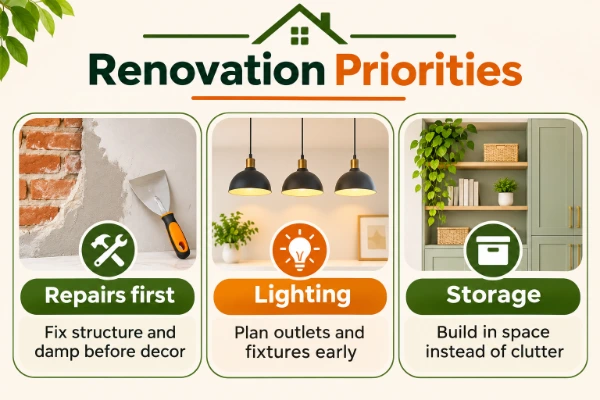
- Ambient ceiling lighting for general light
- Task lighting for counters and desks
- Accent lighting for art and features
- Under-cabinet lighting in kitchens, which removes shadows on worktops
- Wall fixtures and decorative lamps for mood
Add dimmers, and choose warm white bulbs around 2700K to 3000K for living spaces. A consistent bulb color in each room looks calmer. Lighting is the cheapest renovation decision to get right and the most expensive to fix later.
Improve Storage Instead of Adding Clutter
Storage is not optional: empty space fills up, so plan storage into the renovation. Built-in storage works best when it matches how you live:
- Built-in shelves and deeper wardrobes
- Under-stair storage
- Tall kitchen cabinets that reach the ceiling
- Window seats with storage underneath
- Mudroom-style drop zones near the entrance
Choose Durable Materials and Finishes
Check flooring, tile, drywall, wood and paint against five criteria: durability, maintenance, appearance, availability and budget. Flooring and paint for everyday use should match the room: use damp-tolerant flooring in wet areas and test paint samples in both daylight and lamp light. Invest in the things you touch every day. Spend more on floors, handles, taps and counters. Durability and maintenance matter most in busy rooms. Appearance and availability matter when you need a match later. Budget keeps the rest honest.

Plan for Flow, Acoustics and Privacy
Good flow means wide doorways, clear sight lines and easy routes between kitchen, dining and outdoor areas. Think about acoustics and privacy too: soft furnishings absorb noise, and bedrooms and bathrooms need separation from busy zones. Flexible partitions can help in open-plan homes.
Check Permits and Local Requirements
Do renovations need approval? It depends on the project and location. Confirm with your local building authority before starting. Homeowners association rules and historic-district requirements may also limit exterior changes. The FTC lists a contractor who asks you to get the permits yourself as a warning sign.
Choose Contractors Carefully and Know When to Hire a Professional
To hire the right people, follow the FTC’s advice and keep timelines and payments in writing. Check materials and contractors carefully by comparing specifications as well as prices. The decoradhouse renovation tips from decoratoradvice approach is to communicate clearly:
- Get several written, itemized estimates for the same scope. Do not pick the lowest bid automatically.
- Verify the license with your state or county and ask for proof of insurance.
- Ask for references, meet the people who will actually do the work and look at previous work.
- Get a detailed written contract with the contractor’s name, license number and start and completion dates.
- Never pay the full amount up front, and do not make the final payment until you are satisfied.
DIY vs professional comes down to risk. DIY suits painting and simple storage. Hire professionals for structural, roof, gas, complex plumbing and electrical work.
Follow the Correct Renovation Order
The renovation sequence protects finished work from damage. Painting before electrical work, for example, means painting twice. Here is the order:
- Inspect the existing property.
- Define the renovation scope.
- Establish the budget.
- Check permits and approvals.
- Finalize designs and material selections.
- Hire appropriate professionals.
- Address structural and major system work.
- Complete walls, ceilings and major surfaces.
- Install flooring and final finishes.
- Add lighting, hardware, furniture and decor.
- Complete inspections and the final punch list.
Should You Renovate Everything at Once?
Not always. Phasing suits tighter budgets and lets you finish and live with one area before starting the next. Choose the first phase by risk: safety and leaks, then the room you use most, then the rest. The order matters more than speed, which is why decoradhouse renovation tips from decoratoradvice favor finishing one project properly before opening another.
Add Energy-Efficient Improvements
To make your home more energy efficient, look at insulation, air sealing, efficient lighting and heating and cooling. These upgrades also support the comfort goals in decoradhouse renovation tips from decoratoradvice, since a draft-free, evenly heated room feels better to live in. The Department of Energy says a home energy assessment can identify areas you should prioritize upgrading. When buying appliances, lighting or windows, look for ENERGY STAR, a voluntary labeling program for products that meet federal efficiency specifications. Seal drafts before adding insulation, and compare ENERGY STAR labels on appliances. Savings depend on your climate, energy prices and habits, so match upgrades to the condition of your home.
Renovate With Long-Term Use in Mind
Design flexible rooms that can change with your needs, with durable surfaces and storage that is easy to reach. A spare room that works as an office today can become a bedroom later if the wiring, lighting and storage allow it. Wider doorways and clear floor space also make a home easier to use as needs change. Live with the house before making final judgements: wait a few months before settling furniture and finishing touches.
Inspect the Work Before Completion
Check the finished work before calling the project complete. Finish strong with details that matter: working power points, exhaust fans, secure hardware and smooth drawers. Check work before later trades cover it, then arrange a final inspection of the whole project. Test fixtures, photograph hidden installations and walk each room with a final punch list. Keep receipts, warranties and product details together. Do this before you make the final payment, and list anything unfinished on the punch list with a completion date.
Where to Start Based on Your Situation
- Older home: begin with the inspection and lead check.
- Small budget: repair first, then lighting, storage and paint.
- Little time: choose one room and finish it completely.
- Planning to hire: collect written estimates before choosing anyone.
Important Renovation Points
- Define the scope and keep a must-have list.
- Keep a 10% to 20% contingency.
- Repair first, decorate last.
- Check permits and compare written estimates.
- Inspect everything before final payment.
Common Renovation Mistakes to Avoid
Most failures in a project that applies decoradhouse renovation tips from decoratoradvice come from skipping early steps:
- Buying materials before measuring, which leads to returns and delays
- Choosing appearance over function
- Ignoring hidden damage that returns later
- Changing the plan repeatedly, which raises costs
- Starting too many rooms at once
- Skipping maintenance planning for the new materials
Final Thoughts
Decoradhouse renovation tips from decoratoradvice work because they put planning, repairs and safety ahead of style. Fix the essentials, protect a reserve, hire carefully and finish with details. A home renovated this way stays comfortable and costs less to maintain. Start with an inspection. This guide is general information, so confirm local rules and use licensed professionals for regulated work.
Frequently Asked Questions
What is the first step in a home renovation?
Identify what needs to improve, then write a clear scope. A home inspection of every room shows which repairs must come before any decoration.
How much should we keep for unexpected renovation costs?
Keep about 10% to 20% of the budget as a contingency reserve, closer to 20% for older or more complex homes.
Should we renovate everything at once?
Not necessarily. Phasing the work suits tighter budgets and schedules, and it lets you finish one area properly before starting another.
How can we reduce renovation costs?
Keep usable features, compare written estimates, avoid changing the plan midway and spend on real problems before cosmetic ones.
Do renovations always require permits?
No. It depends on the project and location, so confirm with your local building authority and check any homeowners association or historic-district rules.
What should I renovate first?
Renovate safety, structural problems and leaks first. Layout, storage and decoration come afterward.
How can I renovate a home on a limited budget?
Prioritize essentials, compare written estimates, reuse sound materials and work in phases. Lighting, storage and paint give the biggest change per dollar.
Should I hire a professional for every renovation?
No. DIY suits painting and simple storage. Hire licensed professionals for structural, electrical, plumbing, gas and regulated work such as lead-safe renovation.
How should I start renovating my home?
Start with a room-by-room inspection, then write the scope, set the budget with a reserve and measure before buying anything.
Can I renovate my home on a small budget?
Yes. Begin with repairs, lighting, storage or paint, finish one project at a time and keep a reserve for surprises.