Home Exterior Decoradhouse: A Practical Guide to Curb Appeal and Upkeep
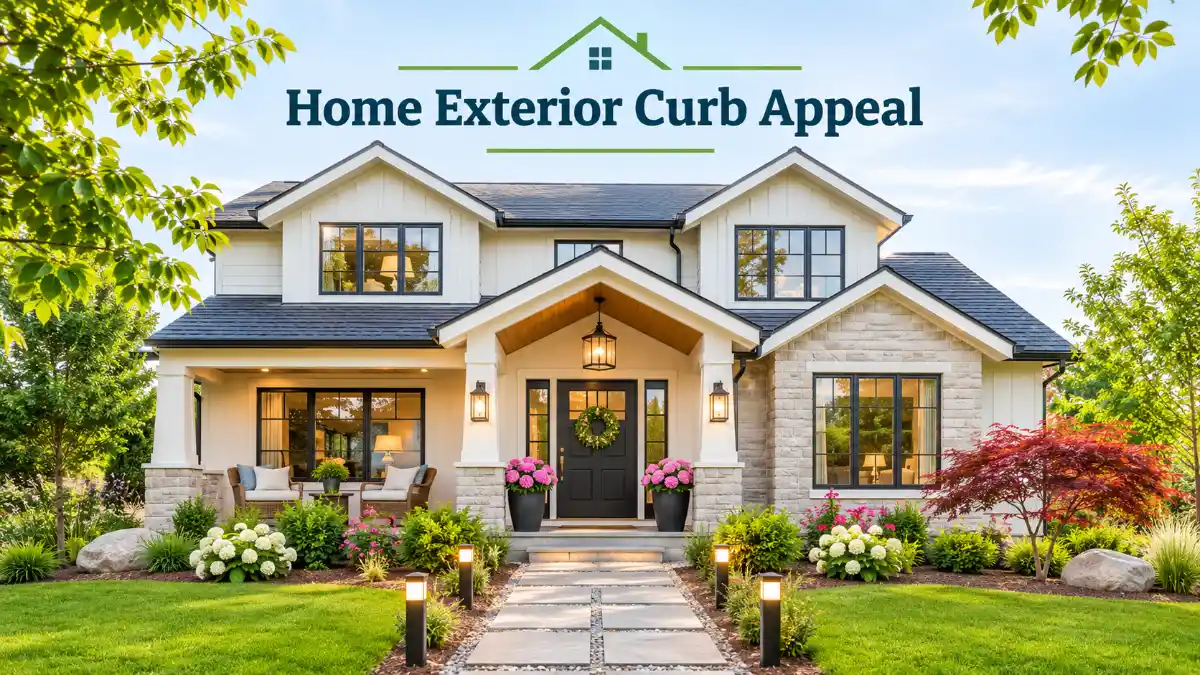
The quickest way to improve a home exterior decoradhouse style is to work in this order: inspect and fix problems, clean every surface, refresh the front entrance, settle the colors, add outdoor lighting, then finish with landscaping and details. Repairs and cleaning come before decoration because a fresh color on damaged siding does not last. This guide covers each area, from the front door to the driveway, plus budget tiers, seasonal upkeep and a ten-step plan.
It is written for US homeowners, including first-time owners and busy ones, who want better curb appeal without a full renovation.
Quick steps:
- Walk the property and list repairs.
- Wash walls, walkways and windows.
- Update the front door, house numbers and lighting.
- Use one main color, one trim color and one accent color.
- Trim and plant, then add a few well-chosen decor pieces.
What Is Home Exterior Decoradhouse, and Why Does the Exterior Matter?
Online guides use home exterior decoradhouse for a practical, affordable approach to making the outside of a house cleaner, more welcoming and better organized. It is a framework, not a licensed standard or certification, so the advice here is checked against recognized sources: the U.S. Department of Energy (DOE) Energy Saver program, the U.S. EPA, the National Roofing Contractors Association (NRCA), James Hardie and Benjamin Moore.
Related searches such as home exterior hacks decoradhouse point to the same practical ideas. The exterior matters for three reasons. It creates the first impression. It protects the structure from weather. It also affects energy use, through windows, roofing and shade. Good exterior work improves all three, not only the look. Because the exterior is what people see first, a clean entrance and tidy yard also set expectations for the rest of the property.
Start With an Exterior Inspection
Walk the whole property before buying anything. Look at the walls, trim, roof edges, gutters, windows, walkways, fence and drainage. Fix small problems first: broken tiles, cracks, rust and peeling paint cost far less now than after a season of weather. Check the roof from the ground only, and call a professional for anything structural, electrical or high up.
Improve the Front Entrance: Give the Entrance a Fresh Beginning
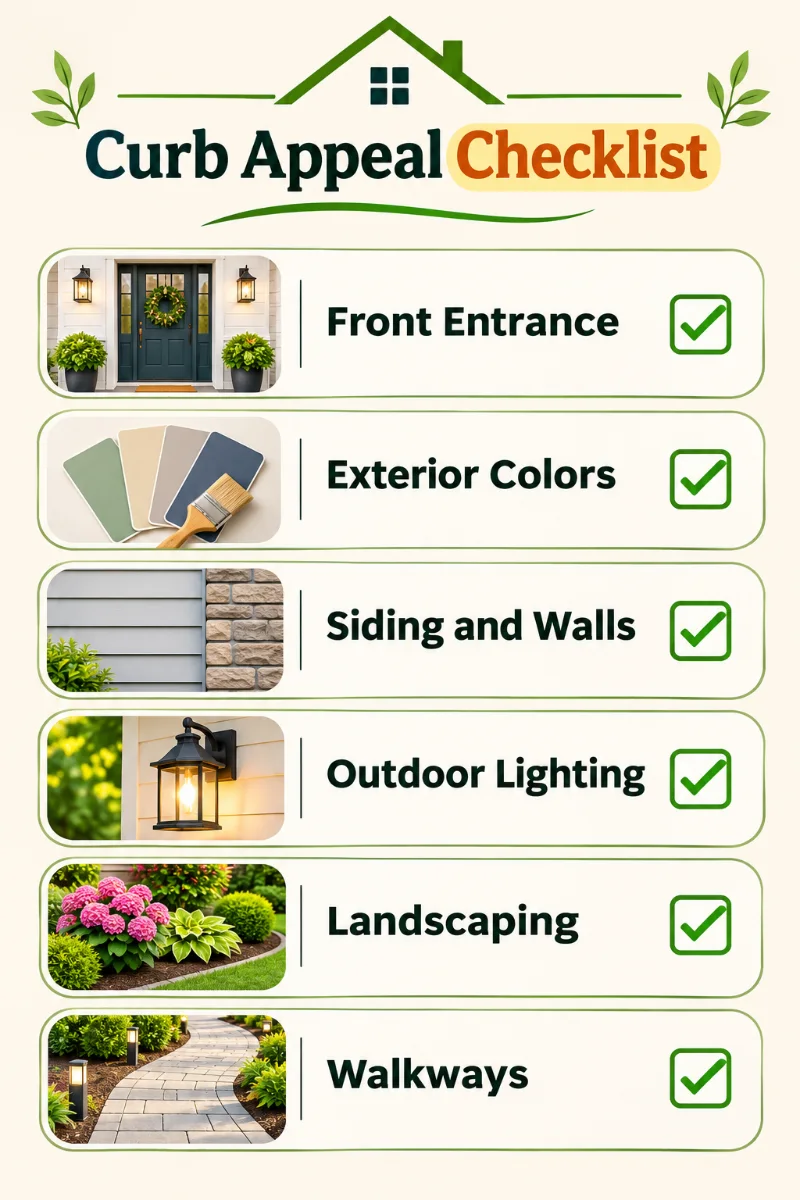
The entrance is where a home exterior decoradhouse plan has the most visual impact for the least money. Visitors judge the whole house from here. Remove old shoes, faded decor and dead plants first, then add back only what earns its place. A nameplate or a single wall light adds character without clutter.
Give the Front Door a Fresh Look
Clean the door, then repaint it if the finish is worn. Update worn hardware, replace a faded doormat and make sure the doorbell works and looks consistent with the other fixtures. Size the doormat to the width of the door. Add one or two matching planters rather than a crowd of pots. For more decor ideas inside the home, see our blog home ideas guide.
Refresh the House Numbers
Choose numbers that are large, high in contrast with the wall and visible at night. Clear numbers help visitors and delivery drivers and cost very little.
Choose Exterior Colors Carefully
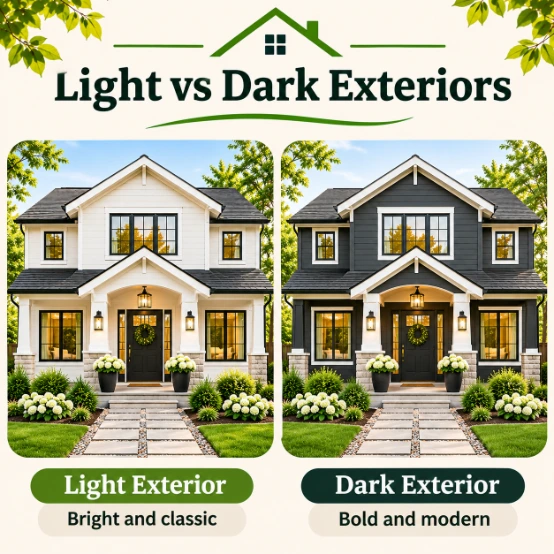
Benjamin Moore notes that most homeowners use three to four colors outside, and that neighboring homes, the landscape and existing materials such as brick, stone and roofing shape the choice. In practice, build an exterior color palette from three parts:

- Main color for the walls
- Trim color for edges, frames and railings
- Accent color for the front door, shutters or garage door
Lighter, softer wall colors with a darker trim color usually look clean and balanced, and a stronger accent on the door draws the eye to the entrance. Color is the biggest decision in any home exterior decoradhouse project, so check homeowners association rules before repainting. Let fixed materials guide you, since the roof, brick and stone will not change. Avoid too many competing shades. Because colors on a screen can differ from real paint, test a sample on the wall and check it in morning, afternoon and evening light. Prepare the surface properly before applying exterior paint, because paint over dirt or flaking material fails early. Our color guides show how Neutral Ground SW 7568 and a deep, moody green like Vintage Vogue Benjamin Moore 462 change with the light, which helps when you test samples outdoors.
Refresh Siding and Exterior Walls
Clean, repair or repaint existing walls before thinking about replacement. Wash with a method suited to the material and follow the manufacturer’s guidance if you use a pressure washer, since too much pressure can damage some surfaces.
Inspect each material for its own warning signs: soft spots or peeling on wood, crumbling mortar on brick, and cracks or warping on vinyl. Common siding choices are fiber cement, vinyl, wood, stone veneer and brick, and each has different upkeep needs. James Hardie, a fiber cement siding maker, says its products are noncombustible or Class A fire rated when tested to ASTM E84, but adds that this does not extend to paints and coatings. Treat that as a manufacturer claim and compare it with other products before replacing anything.
Upgrade Outdoor Lighting
Lighting turns the exterior into a design feature at night and improves safety. Use a few targeted fixtures instead of many bright ones:
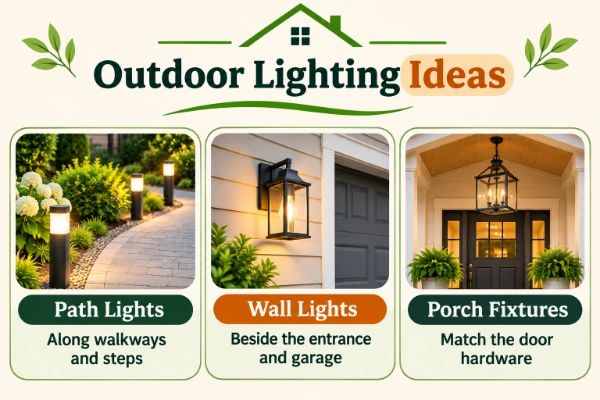
- Path lights along walkways and steps
- Wall lights beside the entrance and garage
- Porch fixtures that match the door hardware
- Solar lights where wiring is difficult
Place fixtures at the entrance, steps and gate, and use one accent light on a tree or textured wall at most. Dusk sensors or timers save effort. Choose warm-toned lighting for a welcoming look and avoid glare. The EPA recommends energy-efficient and solar-powered lighting as part of greener landscaping, which also keeps running costs low.
Make Landscaping Part of the Design
Treat landscaping as part of the house, not a separate project. A mix of lawn, shrubs, flower beds, planters, ground cover, decorative grasses and trees gives the front of the home layers. Use low plants along paths, medium shrubs to frame the house and trees for structure.

Plant for the mature size of each shrub and tree, and spread mulch to keep beds neat. Keep shrubs away from doors and windows so they do not block light or trap moisture. The EPA recommends native, climate-appropriate plants and permeable surfaces for managing stormwater. The DOE adds that a well-designed landscape can lower energy bills, and that carefully placed trees can shade the house in summer and block winter wind. Both ideas also make a home exterior decoradhouse plan easier to maintain.
Create Attractive Planter Arrangements and Add or Refresh Window Boxes
Use matching containers near entries and make sure each has drainage. For window boxes, match the plants to the sunlight each window receives and install boxes securely.
Keep the Yard and Garden Neat
Mow, edge, remove weeds and dead growth, and keep plants from spreading onto paths. A tidy yard does more for first impressions than expensive plants in a messy one.
Create Attractive Walkways
The walkway should connect the street, driveway and front door. Clear debris, repair cracks and choose materials that suit the house. Pavers, stone, brick, gravel and concrete all work, so pick the one that echoes the house, such as brick paths with a brick home. Keep edging plants trimmed so people can walk comfortably, and light the path for night use. A path that curves gently or widens near the door feels more inviting than a narrow straight strip.
Improve Windows and Shutters
Clean the glass, repaint tired trim and refresh or replace damaged shutters. Make shutters look functional by sizing them to fit the window opening. Refresh window trim in the trim color so the frames stand out against the wall. When windows are old or drafty, energy-efficient windows are worth considering, but treat them with roofing and shade as one system rather than a single fix.
Add a Comfortable Outdoor Living Area
Give the Porch a Purpose
A porch works best with one clear use: a bench for shoes, a pair of chairs or a small table. Choose weather-appropriate furniture and keep the entrance path clear.
Make the Patio More Comfortable
For a patio, add outdoor furniture, shade and lighting. A pergola or umbrellas provide cover, and weather-resistant materials last longer outdoors. Leave clear walkways and do not overcrowd the space.
Use Outdoor Decor Carefully
Choose a few well-scaled pieces such as a lantern, a wall planter or a decorative bench. Too many small items make the exterior look cluttered and are harder to keep clean.
Organize the Garage and Driveway and Make the Parking Area Part of the Arrangement
Clean or repaint a sound garage door and replace it only if it is damaged or inefficient. Keep the driveway free of oil stains and clutter, and store hoses, bins and tools so they do not sit in view. A good home exterior decoradhouse plan also treats the parking area as part of the arrangement: edge it with plants or pavers, keep it tidy and light it. Store tools, hoses and bins where they do not block paths, and keep emergency access clear.
Upgrade the Fence and Gate, Add Privacy and Hide Utility Areas
Inspect the fence and gate for rot, rust, loose boards and damaged posts, and keep gate hardware working. Repaint or reseal the fence on the same schedule as the house so the two age together. For privacy without a closed look, use a trellis with climbing plants or layered shrubs. When hiding bins and utility equipment, never block meters, vents, access panels or drainage.
Keep the Roof in Good Condition
A roof is difficult to inspect safely, so look from the ground for missing shingles, sagging or debris, and for gaps or lifting in the flashing, the metal strips that seal joints, chimneys and roof edges, and call a qualified roofer for repairs. The NRCA publishes technical resources and consumer information on roof maintenance, installation and weather damage, and its EnergyWise Roof Calculator estimates thermal performance and energy costs. Repair before replacing where you can.
Maintain Gutters and Drainage: Think About Water Management
Clear gutters and downspouts regularly and direct water away from the foundation. Water management is the least visible part of a home exterior decoradhouse plan, yet it protects everything else. Extend downspouts, keep soil sloping away from walls and use permeable surfaces where you can, as the EPA recommends. Poor drainage damages walls, paths and landscaping faster than almost any cosmetic problem, so check it before storms and after heavy rain.
Use Low-Maintenance Materials
Choose weather-resistant materials such as fiber cement siding, composite decking or powder-coated metal for exposed areas. Low-maintenance materials still need cleaning and inspection, so do not treat them as permanent.
Improve Exterior Energy Efficiency
Look at windows, roofing and shade together. Energy-efficient windows, cool roofing and exterior shading such as awnings, trees or pergolas all reduce heat gain in hot climates. Match any upgrade to your local climate, and ask a qualified professional before changing roofing or insulation.
Create a Consistent Exterior Style: Refresh Small Details
Repeat one material, color or finish across hardware, lights, numbers and planters, such as black metal throughout. Use a few well-scaled decor pieces and skip clutter. Consistency makes a home look planned, and small details such as house numbers, a mailbox and hose hooks deliver a bigger effect than their cost suggests.
Budget-Friendly Exterior Improvements
Sort work into three tiers:
- Low cost: cleaning, trimming, a new doormat, house numbers, mulch and reorganizing items. Do these first and live with them for a few weeks
- Medium cost: exterior paint, new lighting, fence repairs, patio furniture and planting. Spread these across a season so each one gets finished
- Larger projects: new siding, pathways, patio construction, and roof or garage door replacement. Get several written quotes and plan them for the dry season
For a home exterior decoradhouse upgrade on a limited budget, finish the low-cost tier first. It gives the biggest visible change per dollar.
Seasonal Exterior Maintenance
Make maintenance part of the design: choose finishes and plants you will actually keep up.
- Spring: wash walls and windows, check for winter damage, test outdoor lights and refresh beds.
- Summer: trim plants, check shade, water planters and look for peeling paint while surfaces are dry.
- Fall: clear gutters and leaves, inspect drainage before storms and store seasonal furniture.
- Winter: check for ice, loose items and storm damage, and keep paths safe.
When to Call a Professional
Hire a licensed pro for roof repairs, electrical work on lighting, structural problems, regrading around the foundation and large tree work. If your home was built before 1978, test for lead-based paint before scraping or sanding, because the EPA’s lead-safe rules for renovation apply to contractors working on older homes. Using a pro for these jobs protects both the house and the finished look.
Common Exterior Design Mistakes to Avoid
Most mistakes in a home exterior decoradhouse project come from skipping repairs or overdoing decoration:
- Painting over damaged surfaces
- Using too many colors
- Over-lighting the exterior
- Blocking paths, windows or drainage with plants or decor
- Ignoring water management
- Crowding the porch and entrance with decor
A Simple Home Exterior Upgrade Plan
- Clean the whole exterior.
- Remove clutter and unneeded items.
- Trim and refresh the landscaping.
- Improve the front entrance.
- Update exterior lighting.
- Repair visible damage.
- Repaint where necessary.
- Add carefully chosen decor.
- Improve the patio or outdoor living area.
- Review the whole exterior for consistency.
Important Points to Remember
- Inspect first and repair early.
- Clean before you paint.
- Use three to four colors at most.
- Light only what needs light.
- Keep paths, windows and drainage clear.
- Choose low-maintenance materials, then still maintain them.
- Improve one area at a time.
Where to Start Based on Your Situation
- Tight budget: do the low-cost tier first, then paint only the front door.
- Little time: clean the entrance, update the house numbers and add path lights in one weekend.
- Older home: inspect the roof edges, gutters and paint condition before any decoration.
- Small yard: use planters, a trellis and one seating spot instead of large beds.
Final Thoughts
A strong home exterior decoradhouse result comes from simple habits: inspect first, repair early, keep one consistent look and improve one area at a time. A clean, cared-for exterior leaves a better first impression than an expensive but neglected one. Start with the front entrance.
Frequently Asked Questions
What is the easiest way to improve a home’s exterior?
The easiest way is to clean it. Wash the walls, windows and walkways, trim the plants, repaint a tired front door and improve the lighting. These steps cost little and change the first impression fastest.
How can I improve curb appeal on a small budget?
Start with cleaning, trimming and mulch, then add house numbers, a doormat and solar path lights. Paint only the front door if the walls are sound. This is the cheapest path for home exterior decoradhouse upgrades.
Which exterior areas should be maintained regularly?
Roofing, gutters and downspouts, siding, windows, doors, drainage, walkways, fences, landscaping and lighting. Gutters and drainage need the most frequent attention, since they protect the foundation.
Should exterior design prioritize appearance or function?
Both, with function first. The exterior protects the home from weather, so repair roofing, drainage and walls before decorating them. Then choose colors, lighting and plants that look good and last.
What are common exterior design mistakes to avoid?
The most common mistakes are painting over damaged surfaces, using too many colors, over-lighting, blocking paths or windows with plants, ignoring drainage and crowding the entrance with decor.
How do I choose exterior colors for my home?
Use a main color, a trim color and an accent color. Benjamin Moore says most homeowners use three to four colors outside. Match the roof, brick and stone, and test samples in different light.
How can I improve my front entrance?
Clean and repaint the front door, add a doormat, upgrade the house numbers and doorbell, add one wall light and keep planters to one or two. Keep the area clear of clutter.
What is the best way to improve outdoor lighting?
Use a few targeted fixtures: path lights, wall lights and porch fixtures in warm tones. Solar lights suit areas without wiring. Avoid glare and light only what needs it.
How often should I maintain my home’s exterior?
Check it each season and inspect it fully once a year. Clear gutters in fall and before storms, and wash surfaces in spring. Maintain roofing and drainage before heavy weather.
What low-maintenance materials are best for a home exterior?
Fiber cement siding, brick, stone veneer, vinyl, composite decking and powder-coated metal are common choices. None is maintenance-free, so inspect and clean them regularly.