Decoration Tips Decoradhouse from Decoratoradvice: A Practical Home Guide
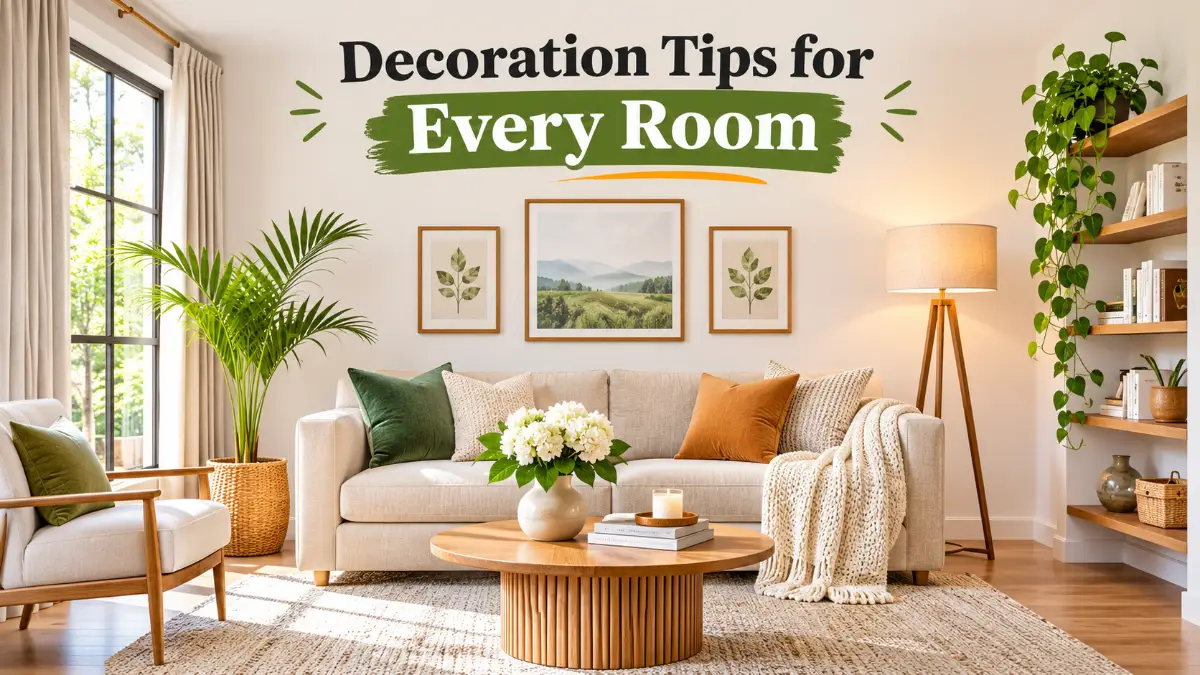
The simplest way to apply decoration tips decoradhouse from decoratoradvice is to decorate in layers: define how each room is used, set a small palette, fix the furniture layout, add three types of lighting, then finish with texture, wall decor and a few personal pieces. Function comes first and styling comes last, so you avoid buying decor that does not fit the room. This guide follows that order, with room-by-room tips, budget and DIY options, a 7 step plan and a final checklist.
It is written for US homeowners and renters, including first-time decorators, who want a better-looking home without a renovation.
Quick steps:
- List what each room is used for and clear out what does not belong.
- Measure, then place the largest furniture first.
- Choose a palette using the 60-30-10 rule and test paint samples.
- Layer ambient, task and accent lighting.
- Add texture, plants and a few personal pieces.
What Are Decoration Tips Decoradhouse From Decoratoradvice?
Online, decoration tips decoradhouse from decoratoradvice is the name given to practical, budget-minded decorating advice built around comfort, function and a calm look. It is not a licensed standard or certification. The advice here is checked against ASID, IKEA, Houzz, Sherwin-Williams and Benjamin Moore. ASID, the American Society of Interior Designers, says effective designers support the people using a space first and the space second, which is the same idea.
Understand Your Space and Requirements
Write down what each room has to do each day: sleep, cook, work, host or store. Note the room’s size, window light, traffic routes and anything that bothers you. Move non-essential items elsewhere before deciding what to add.
Plan Your Home Decoration Project
Measure the room, doorways and large furniture, then sketch the layout. For changes that involve structure, wiring or accessibility, work with a qualified interior designer. ASID says its Practitioners meet its qualifications, complete continuing education and follow a code of ethics. Collect a small mood board from sources such as the IKEA and Houzz ideas pages and look for repeated colors and materials. IKEA’s Kreativ 3D planning tool can help you preview a layout. Photograph the room from the doorway as well, because a photo shows crowding and imbalance that you stop noticing in daily life.
Set a Realistic Budget Before You Start
Separate repairs from decor and rank each item by how much it improves the room. Keep a small reserve for surprises. The table below is an illustrative 500 dollar refresh only, not a retail price quote.
| Item | Illustrative amount |
|---|---|
| Paint | $120 |
| Lighting | $90 |
| Textiles | $100 |
| Storage | $80 |
| Accents | $60 |
| Reserve | $50 |
Choose One Clear Style Direction for the Whole Home
Every strong example of decoration tips decoradhouse from decoratoradvice starts with one style direction. Pick three words that describe the look you want, such as calm, natural and warm, and repeat one wood tone or metal finish in at least two rooms. A second style can appear as an accent, but one should lead. Choose decoration according to your lifestyle: children, pets, a home office or a small apartment each change what is practical.
Choose the Right Color Palette
Choose a Color Scheme That Creates Harmony
Build a color palette from three roles: a main color, a support color and an accent color. Warm white, beige, sage green, soft gray and taupe suit many homes as a base. Start from what you already love, such as cushions, art or a rug, and match the scheme to your interior style.
Use the 60-30-10 Decorating Rule
The 60-30-10 rule is a common designer guideline: about 60% main color (walls, large rugs), 30% support color (sofa, curtains) and 10% accent color (cushions, art). Repeat the accent at least three times in a room so it looks planned. Our color guides show how Edgecomb Gray HC-173 and Vintage Vogue Benjamin Moore 462 look in different light, from a soft greige to a deep green.
Use Accent Walls and Complementary Colors
An accent wall behind a sofa or headboard adds color without overwhelming the room. Complementary colors, such as soft blue with warm clay, work best in small doses. Benjamin Moore describes complementary, analogous and monochromatic schemes as ways to build a cohesive palette, and notes that warm and cool colors change how a space feels. Check undertones, the subtle warm or cool hint inside a color, so a beige does not clash with a gray.
Test Colors Under Different Lighting
Sherwin-Williams advises testing a sample on the wall and viewing it at different times of day, because “color never stands alone” and light changes how it looks. Try different sheens too, and never choose paint from a tiny chip alone. To connect two rooms, paint the neighboring room two steps lighter or darker on the same color chip.
Avoid Common Color Selection Mistakes
Do not pick paint from a tiny chip, skip testing in morning and evening light, use more than three or four colors, or ignore the fixed elements such as flooring and countertops. Warm and cool undertones that fight each other make a room feel off even when each color is attractive alone.
Smart Furniture Planning and Furniture Arrangement
For smart furniture planning, measure first and choose furniture that fits your room size. Check doorways, stairs and walls, and keep the largest piece in proportion to the space.
- Establish a focal point. A window, fireplace, bed or media wall gives the room structure. Arrange seating toward it.
- Maintain clear walking areas. Leave comfortable walking space, let doors open fully and avoid blocking windows.
- Size the rug correctly. The rug should sit under at least the front legs of the main seats, with a floor border visible where possible.
- Choose multifunctional furniture. Storage benches, nesting tables, storage ottomans and folding desks earn their space in smaller rooms.
Pushing every piece against the wall rarely helps. A slightly pulled-in arrangement usually feels more connected.
Layered Lighting: Combine Three Types of Lighting
Layered lighting makes a room more useful by day and more comfortable at night.
- Ambient lighting gives general light from ceiling or wall fixtures.
- Task lighting supports reading, cooking and desk work.
- Accent lighting highlights art, shelves or a textured wall.
Use one consistent bulb color per room. Warmer light suits living and sleeping spaces, and neutral light suits kitchen worktops and bathroom mirrors. Mount lights at different heights, with a ceiling or wall source, a lamp at seat level and a small accent light lower down, so no single fixture does all the work. Keep windows clear to make the most of daylight, and place a mirror to reflect it. For better use of natural light, keep furniture away from windows, clean the glass and use light curtains that still give privacy. Layered lighting is also the cheapest part of decoration tips decoradhouse from decoratoradvice to upgrade, since lamps and bulbs cost little.
Add Texture Instead of More Clutter
When a room feels flat, add texture before adding objects. Combine at least three surface types, such as wood, linen, cotton, glass, metal and woven fibers, and include one natural material in each room.
Use pattern scale control: one large pattern, one small pattern and plain pieces for the rest. To decorate without creating clutter, group items in sets of three or fewer, keep some empty surface and repeat accent colors for consistency.
Decoration Tips by Room
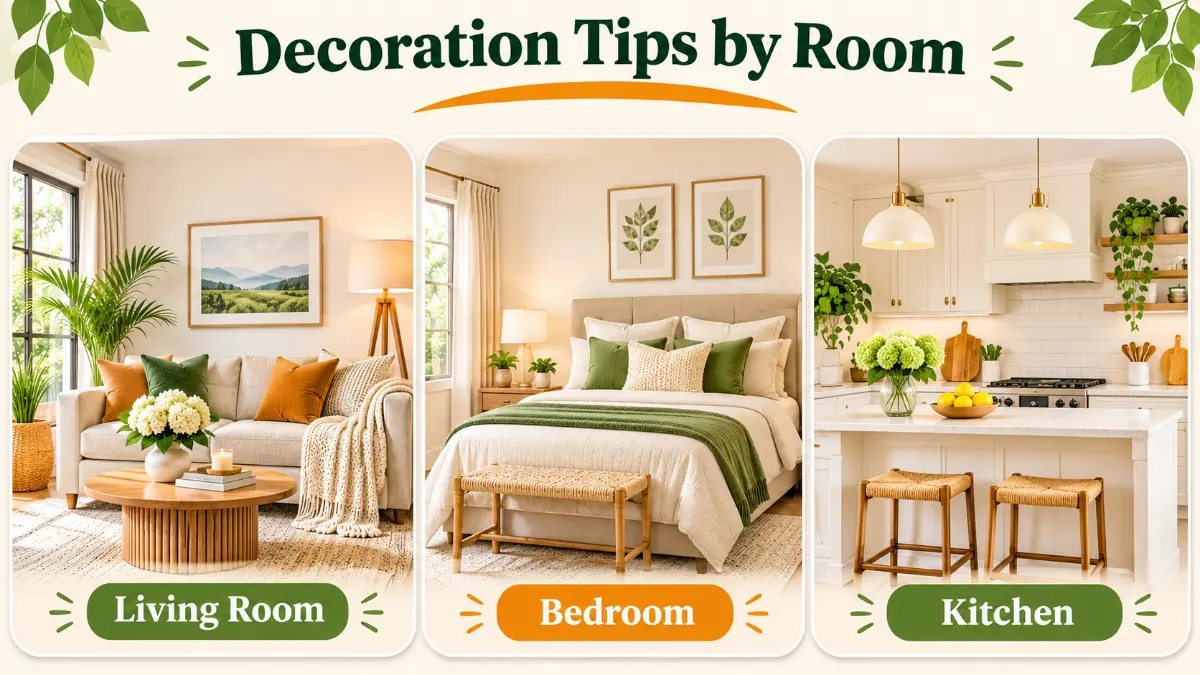
Give each room its own purpose, then decorate for that job. This room-by-room approach is the heart of decoration tips decoradhouse from decoratoradvice.
Living Room
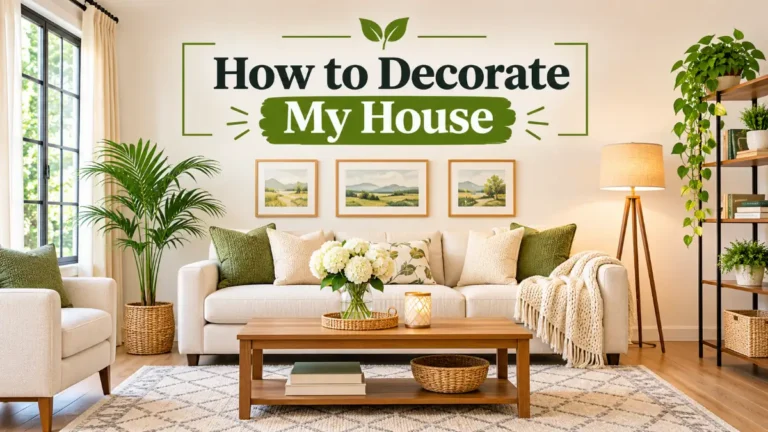
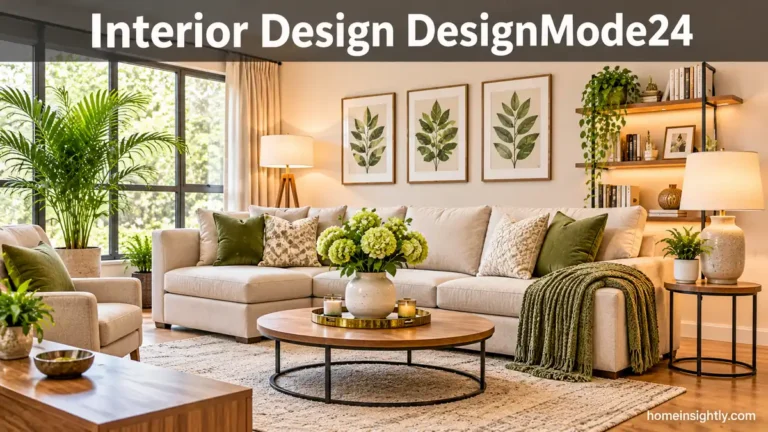
Arrange seating for conversation, keep a surface within reach of each seat and add a properly sized rug and coffee table. Layer lamps at different heights, then add textured cushions and one throw. Leave one seat free of cushions so the sofa stays comfortable, and keep the coffee table in proportion to the seating. For more room ideas, see our blog home ideas guide.
Bedroom
Make the bed the focal point. Choose soft bedding, calm colors and warm bedside lighting, and keep surfaces nearly clear. Under-bed storage hides daily clutter, and repeating two or three colors across bedding and curtains keeps the room calm without matching sets.
Kitchen and Dining Area
Keep only daily tools on the counter and add good task lighting, such as under-cabinet lights. Update handles for a quick refresh and use open shelving selectively. In the dining area, leave room to pull out chairs and avoid tall centerpieces that block sightlines.
Bathroom
Choose humidity-resistant accessories and fix leaks and ventilation first. Good mirror lighting and a few baskets keep it organized. Stick to a neutral palette and a few simple accessories, and keep the counter clear so the room feels larger.
Home Office or Study Area
Use a comfortable chair, a desk lamp and organized storage. A dedicated corner separates work from relaxation, and a folding desk suits small spaces.
Entryway
Give shoes, keys and bags a defined spot with hooks, a small table or a bench. Add a mirror and a plant, and keep the path open.
Use Wall Decor to Show Personality
Give empty walls a purpose, but decorate one main wall rather than covering every surface. Artwork, mirrors and shelves all work. Fill about two thirds of the wall width above a sofa or bed so art is not undersized.
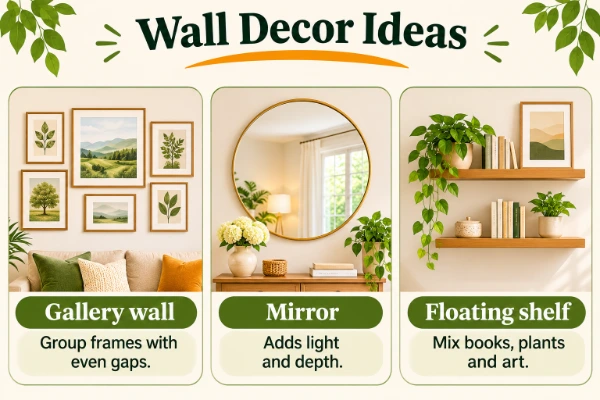
For a gallery wall, lay the frames on the floor first, keep even spacing and use a shared element such as frame color. Hang curtains high and wide to make windows look larger. For architectural details, refresh door paint, handles and trim in colors that match the room and suit the existing features.
Make Small Rooms Look Bigger With Space-Saving Decoration Ideas
Small-space decorating is about proportion. Show more floor and light:
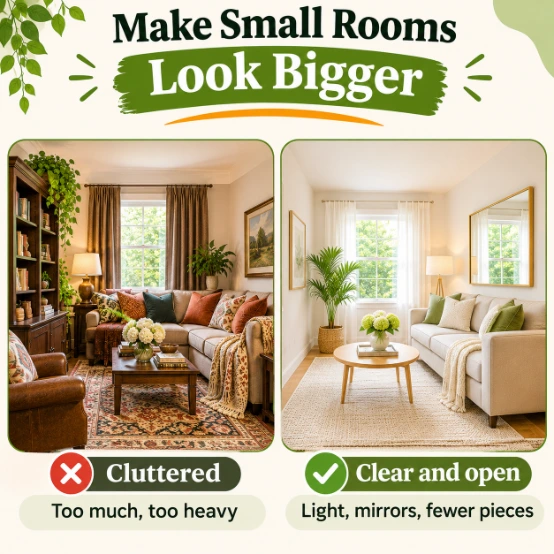
- Choose furniture with visible legs and avoid oversized pieces.
- Use light colors and hang curtains close to the ceiling.
- Place mirrors to reflect light, opposite a window where possible.
- Keep one clear surface in every room.
Fix These First in Small Rooms and on Small Budgets
Clear space and light come before decor. Remove surplus furniture, clean the windows, then spend in this order: paint or a deep clean, curtains, the main light and a correctly sized rug. Small accessories come last, because they cannot rescue a poor layout.
Make Storage Part of the Decoration
Keep storage both functional and attractive. Use vertical storage such as tall shelves and floating shelves, and add baskets and drawer organizers for small items. Choose closed storage for clutter and leave shelves partly empty so they read as display. Smart storage is what lets you decorate without creating clutter, and it matters most in rentals, apartments and other small homes. To keep your home organized without sacrificing style, store items near where you use them, label containers and sort before buying organizers.
Bring Natural Elements Indoors and Personalize Your Interior
Natural, seasonal and personalized decoration ideas share one rule: add warmth, not volume. Add indoor plants chosen for the light they will receive and the care you can give, since a few healthy plants beat many struggling ones. Natural materials such as rattan, bamboo, stone, jute and clay add warmth without adding clutter.
To personalize your interior without overdoing it, treat small home details such as lamps, handles and cushion covers as your main tools. Display only display a few meaningful items, such as photos, books or inherited pieces, with space around them. Rotate them rather than showing everything at once.
Budget-Friendly Home Decoration and DIY Ideas
Budget-friendly home decoration is central to decoration tips decoradhouse from decoratoradvice, because the advice favors planning and rearranging over spending. Solve problems before buying decor, and leave electrical and structural work to qualified professionals.
- Refresh existing furniture: clean upholstery, replace handles or refinish wood instead of replacing the piece.
- DIY decoration ideas: framed photos, painted planters and reused furniture in good condition.
- Small decorative changes: new curtains, cushion covers and lampshades in coordinated colors. When money is tight, fix what is blocking the room first, then spend in order of impact.
- Where to save and where to spend: save on seasonal accents and small decor, and spend on seating, a mattress and essential lighting.
Seasonal Decoration and Sustainable, Energy-Efficient Options
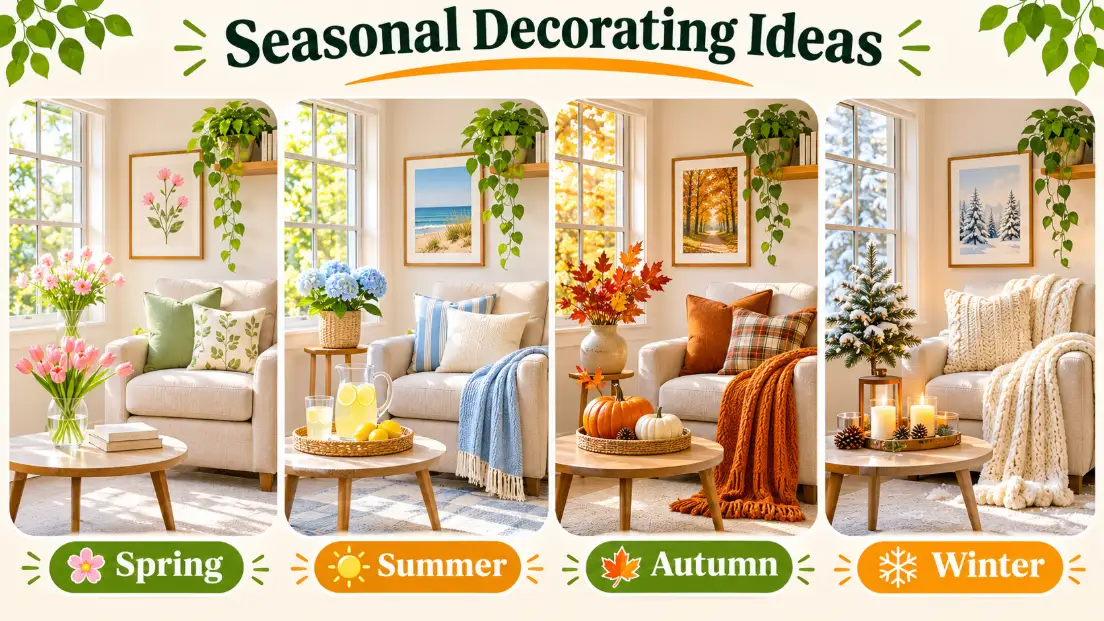
Seasonal decoration can be as simple as lighter textiles and greenery in warm months, and throws and deeper colors in fall and winter. For sustainable and energy-efficient decoration, swap frequently used incandescent bulbs for LEDs. ENERGY STAR says certified LED lighting uses 90% less energy and lasts 25 times longer than traditional incandescent lighting. Insulating curtains can also help reduce heat loss at windows, so check each product’s details. Repair furniture before replacing it.
Improve Your Front Entrance and Curb Appeal
A clean path, a maintained door, a doormat, plants and weather-rated lighting improve the first impression. Style patios, balconies and outdoor seating areas with compact, weather-tolerant furniture, a small rug or planter and clear walkways.
Where to Start Based on Your Situation
- Messy room: clear it, then fix the layout.
- Small budget: paint or clean, curtains, main light, then a correctly sized rug.
- Renting: change rugs, lamps, textiles and removable storage.
- Little time: follow the 7 step plan below over one week.
Update Your Decor Gradually
Start with the room you use most, rearrange before buying and choose timeless main pieces that flexible accessories can update. Doing one room at a time, as decoration tips decoradhouse from decoratoradvice suggests, protects your budget and your taste, and it lets you see what works before repeating it elsewhere. A single room finished well also teaches you which colors, materials and layouts you enjoy living with, so later rooms need fewer corrections.
Prioritize Quality, Comfort and Long-Term Value
Check cleaning needs, construction quality and replacement cost before buying. A comfortable sofa you keep for years beats several cheap ones.
Common Decorating Mistakes to Avoid
The most common mistakes in applying decoration tips decoradhouse from decoratoradvice are simple to fix:
- Buying decor before fixing layout, light and color
- Skipping measurements
- Relying on one ceiling light
- Using too many colors or competing patterns
- Choosing undersized rugs and art
- Overcrowding a room and blocking walking space
- Chasing every trend instead of prioritizing comfort
- Mixing too many styles, so the home loses visual balance and a consistent design
A 7 Step Decorating Plan
This plan puts decoration tips decoradhouse from decoratoradvice into one week for one room.
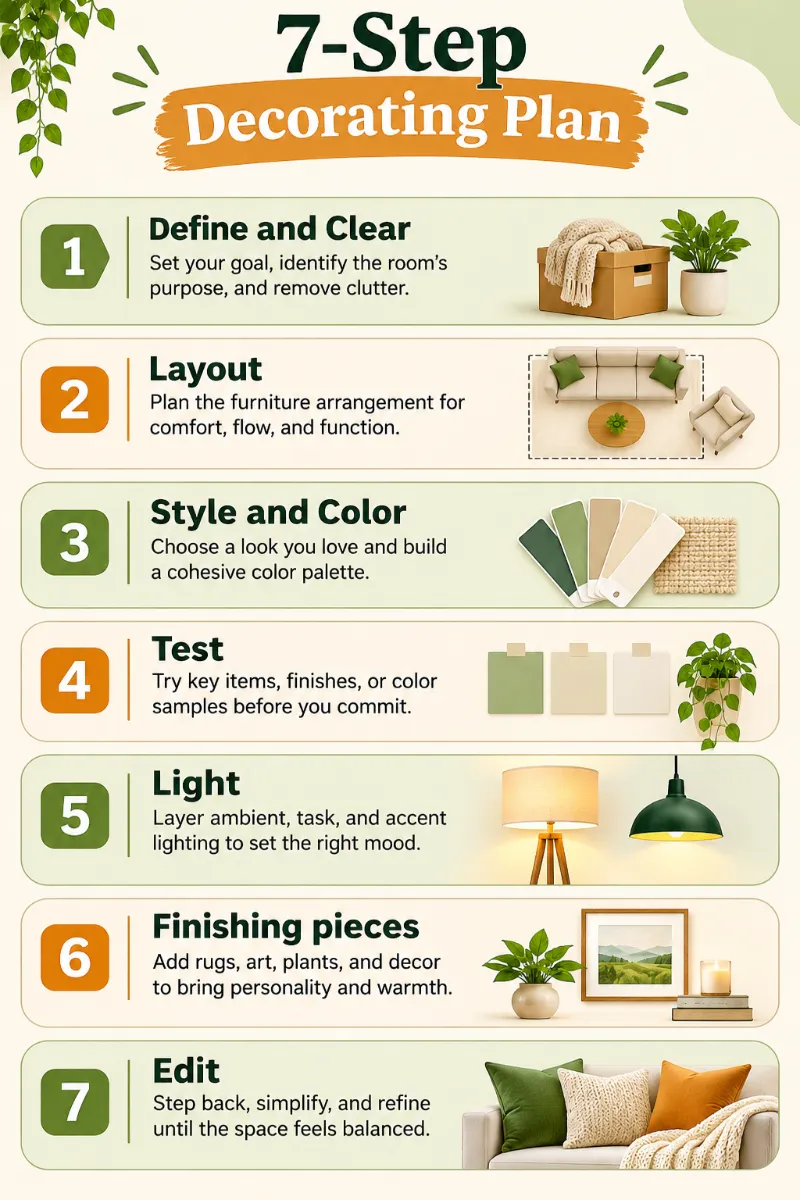
- Define and clear: list the room’s jobs and remove what does not belong.
- Layout: measure and place the largest pieces first.
- Style and color: pick the palette and one style direction.
- Test: try paint samples in morning, afternoon and lamp light.
- Light: add ambient, task and accent lighting.
- Finishing pieces: add the rug, curtains and large art.
- Edit: remove anything that crowds the room.
Final Home Decoration Checklist
- Does the layout leave clear walking areas?
- Is there a focal point?
- Does the room have three layers of light?
- Do the colors follow the 60-30-10 balance?
- Is storage handled?
- Is the room safe, with tall furniture secured?
Example: Refreshing a Small American Living Room
This is an illustration, not a documented project. In a small living room, you might declutter, repaint the walls a warm white, hang curtains higher, add a correctly sized rug and a second lamp, and place one mirror opposite the window. The result is a lighter, more open room, with costs depending on your local prices.
Conclusion: Decoration Tips Decoradhouse from Decoratoradvice
The best results from decoration tips decoradhouse from decoratoradvice come from order and restraint: plan, measure, choose a simple palette, layer your lighting and edit often. Work one room at a time and let function guide every choice.
Frequently Asked Questions
Where should I start if a room looks messy and unfinished?
Start by removing items that do not belong, then fix the layout and walking space. Add color, lighting and decor only after the room works.
How do I choose a color scheme if I am not confident with color?
Use a light neutral base such as warm white, beige or soft gray, then add one support color and one accent. Follow the 60-30-10 rule and test samples at different times of day.
What makes a small room look bigger without renovation?
Show more floor and light: choose furniture with legs, use light colors, hang curtains high and place a mirror to reflect daylight. Clearing surfaces helps too.
How much should I spend first when the budget is limited?
Spend first on what changes the room most: paint or a deep clean, curtains, the main light and a correctly sized rug. Buy small decor last.
Can I mix two decorating styles in one home?
Yes. Let one style lead and use the other as an accent, with shared base colors and finishes tying them together.
What can I change in a rented home without permanent work?
Change the layout, rugs, lamps, textiles and removable storage. Check your lease before drilling, painting or fixing anything to walls.
What is decoration tips decoradhouse from decoratoradvice?
It is the name used online for practical home decorating advice based on function, a simple palette, layered lighting and gradual updates. It is a framework, not a certified standard.
How do I plan a home decoration project?
List what each room is used for, measure the space, sketch the layout, set a budget and then follow a step-by-step plan, one room at a time.
How do I set a realistic budget for home decoration?
Separate repairs from decor, rank each item by impact, keep a small reserve and buy the highest-impact items first. Save on seasonal accents and spend on seating and lighting.
What are common home decoration mistakes to avoid?
Buying decor before fixing layout, skipping measurements, using one light source, mixing too many colors or patterns, choosing undersized rugs and crowding walkways.